
Turkish Roman Travertine Tiles
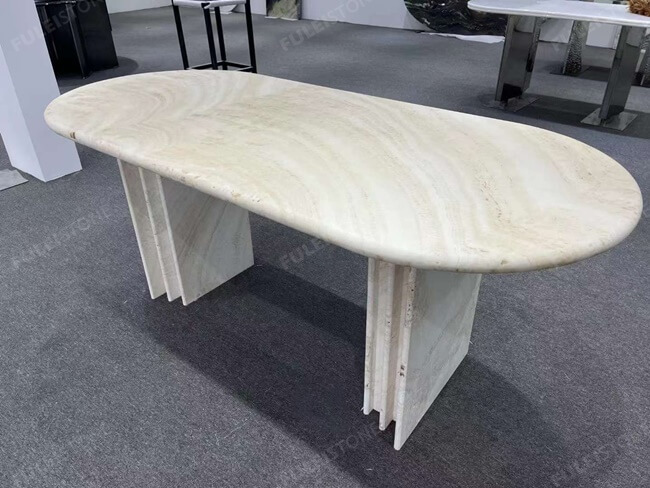
STOOANCE supplies beige Turkish Roman Travertine Tiles for indoor floors and wall cladding. The listed option has a polished finish and 18 mm thickness, with project-specific sizes and other thicknesses available for review. As natural stone, colour, veining, pores and fissures vary; approve the actual sample or batch before production.
For a project quotation, share your drawings, quantities, finish and destination. STOOANCE can coordinate material selection, cut-to-size fabrication and inspection records matched to the order. Floor suitability, including slip requirements, should be checked for the intended space.
- Beige travertine for indoor floors and wall cladding
- Listed finish: polished; listed thickness: 18 mm
- Project-specific sizes and other thicknesses reviewed against drawings
- Remote material selection and batch approval supported
- Inspection photos, numbering and packing records available according to the order
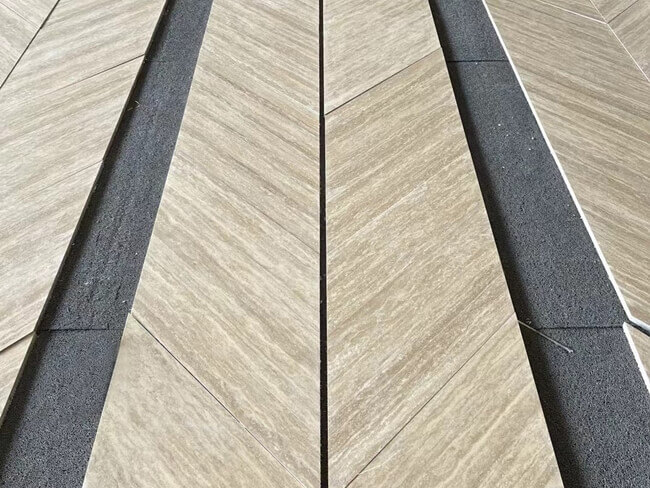
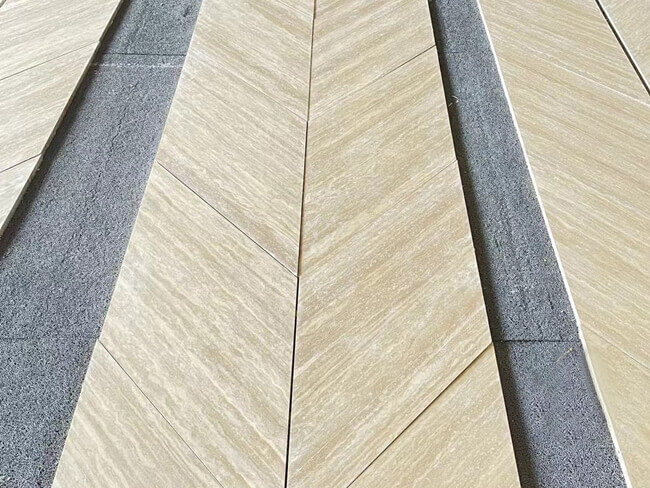
Beige Travertine Character and Natural Variation
STOOANCE lists Turkish Roman Travertine Tiles as beige travertine. Their appeal lies in the warm color and natural variation of the stone. The product name alone does not verify the quarry source, so origin should be confirmed if it matters to the specification.
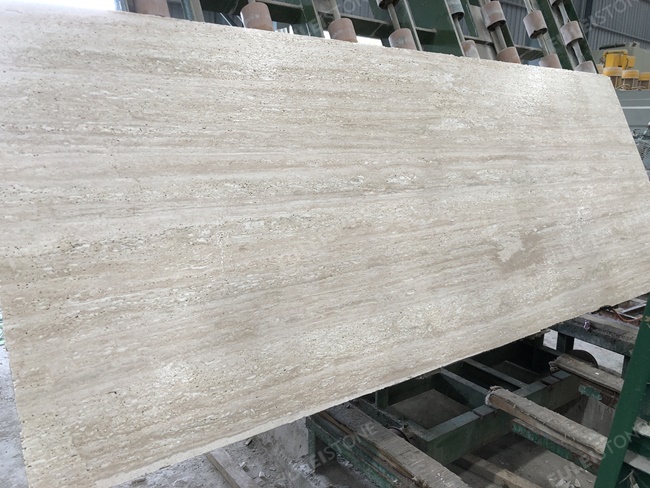
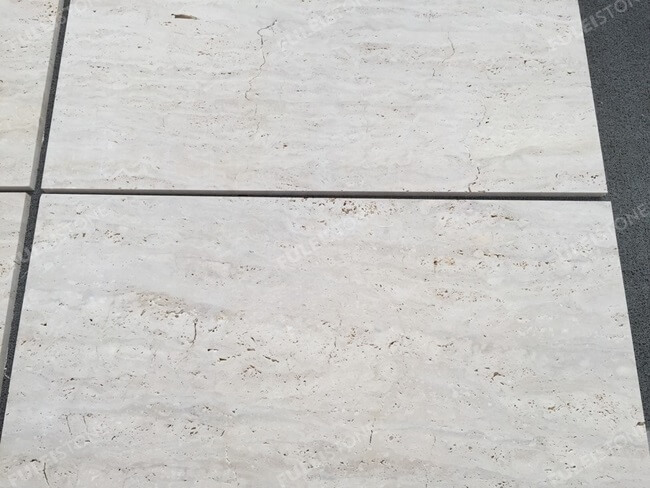
Color, veining, pores and natural fissures can differ between pieces and batches. A small sample helps establish the desired look, but it may not represent the full range of a larger order. Review images or video of the actual material and agree on an acceptable color range before production.
For areas where tiles will be seen together, ask to review how the selected batch looks as a group. Confirm which visible pores or fissures are acceptable and whether any resin treatment is present on the selected material. These decisions give the buyer and production team a clear reference for assessing the finished order.
Request a Quote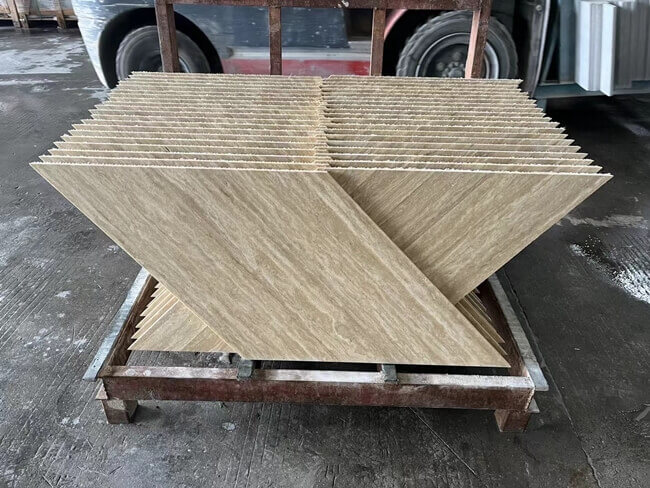
Tile Sizes, Thickness and Polished Finish
STOOANCE offers Turkish Roman Travertine Tiles in project-customized sizes. Specify the required tile dimensions from your drawings or layout schedule so the cutting plan can be reviewed against the selected material. Final dimensions, quantities, and tolerances are confirmed before production.
Source-listed options and order checks. Attribute: Size; Listed option: Project-customized; Confirm for your order: Tile dimensions and layout schedule. Attribute: Thickness; Listed option: 18 mm; other customized thicknesses; Confirm for your order: Required thickness and suitability for the proposed format. Attribute: Finish; Listed option: Polished; Confirm for your order: Approved finish sample and any project-specific surface requirements.
For a quote, provide the tile schedule, thickness, finish, quantity, destination, and any edge or cutout details. STOOANCE can then review fabrication requirements and confirm the specification against the actual material and production plan. If the tiles are intended for flooring, have the project team assess whether the polished surface meets the location’s slip-resistance requirements; no product-specific performance value is supplied here.
Request a Quote
Indoor Flooring and Wall Cladding Applications
Turkish Roman Travertine Tiles are listed for indoor floors and wall cladding. Their beige color and polished finish can be considered for residential rooms, hotel interiors, and commercial spaces where the project design calls for natural stone. Suitability should be reviewed for each room and its expected use.
For floors, confirm expected foot traffic, cleaning methods, exposure to water, and applicable slip-resistance requirements before approving the polished finish. Entrances, bathrooms, and other areas that may become wet need particular attention. The project team should also specify the installation system and any required surface treatment based on the selected material and site conditions.
For wall cladding, review the substrate, fixing method, panel layout, corners, and transitions with the local installer. STOOANCE can supply the tiles and coordinate fabrication to the approved project requirements; overseas installation is normally carried out by qualified local contractors. Share the room use and installation drawings so the material and finish can be assessed for the intended application.
Request a Quote
Drawing-Based Cutting for Travertine Tiles
STOOANCE can fabricate Turkish Roman Travertine Tiles to approved project drawings. For a coordinated layout, the cutting plan should identify each piece, its position, joint lines, and the intended direction of the stone’s natural pattern. Openings and shaped pieces need enough detail to assess how they can be cut from the selected material.
Send the following with your inquiry so STOOANCE can review the fabrication scope:
- Dimensioned plans and elevations showing tile positions, joints, and any changes in direction.
- A piece schedule identifying straight cuts, shaped pieces, openings, and required quantities.
- Details for visible edges, corners, returns, and transitions to adjoining materials.
- The requested pattern direction and any pieces that must align across a joint.
STOOANCE can review the drawings before production and prepare numbered pieces where the layout requires them. Final cutting details, tolerances, and material yield depend on the approved drawings and selected stone; confirm these before fabrication begins.
Request a Quote
Batch Approval, Inspection and Packing
Before production, approve a sample or the actual batch of Turkish Roman Travertine Tiles. Review the acceptable color range, veining, pores, natural fissures and any resin treatment on the selected material. STOOANCE can support remote video selection and batch reservation; current availability must be confirmed.
- Confirm the approved batch against the order, including the agreed finish, thickness, quantities and any piece numbering.
- Inspect dimensions, thickness, flatness, finish consistency and edges against the approved drawings and order requirements.
- Review labels and packing by room, elevation, drawing or installation sequence where the project requires it.
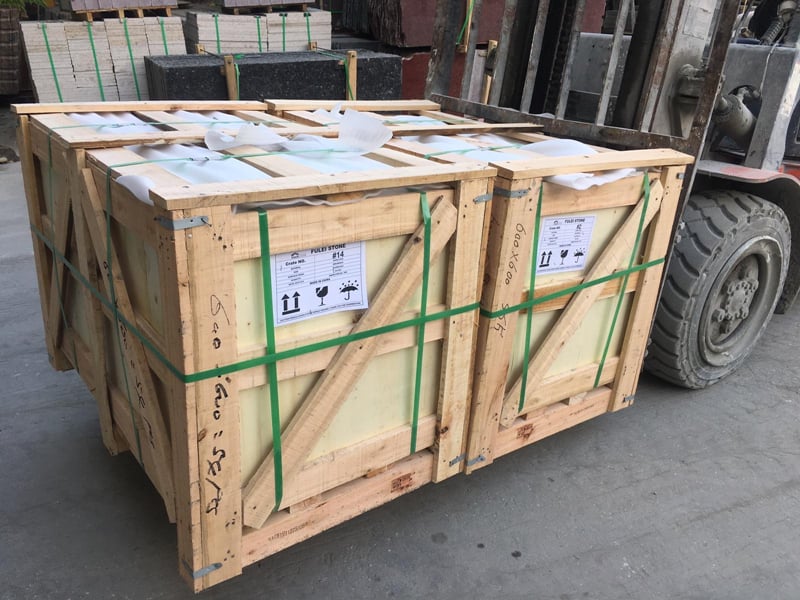
- Select suitable protection and packing for the order, such as foam and corner protection with plywood cases or fumigated wooden crates.
Inspection photos or video, labels, numbering and packing records can be provided according to the order. Agree on the inspection plan and packing method before production, especially when tiles must be sorted or identified for a specific layout. Final tolerances and documentation should be confirmed for the selected material and project requirements.
Request a QuoteTechnical Specifications
Product Information
- Product
- Turkish Roman Travertine Tiles
- Material / Category
- Travertine
- Color
- Beige
- Size
- Project Customized Size
- Thickness
- 18mm, Other Customized Thickness
- Finish
- Polished
- Location
- Floor, Indoor, Wall Cladding
- Material
- Marble, Travertine
Order Confirmation
- Selected Material
- Approve the actual material, batch or sample before production
- Custom Fabrication
- Dimensions, thickness, finish, edges and cutouts are confirmed from drawings
- Quality Records
- Inspection photos or video, labels, numbering and packing records are available according to the order
Turkish Roman Travertine Tiles FAQ
Review these common sourcing questions, then send your project requirements for a product-specific quotation.
Request a QuoteDoes “Turkish Roman” identify the verified quarry origin of these tiles?
No. “Turkish Roman” is the product name, but the supplied product facts do not verify the quarry origin of these tiles. They identify the material as travertine, the color as beige, and the listed finish as polished. STOOANCE has sourcing relationships with quarry owners in Turkey, but that does not establish where this specific batch was quarried. Before ordering, ask STOOANCE to confirm the selected batch’s origin and provide supporting documentation for review.
Are the natural pores filled, and can the filling method be specified?
The supplied specifications do not confirm whether the natural pores in these tiles are filled. You can specify your preferred filling method for STOOANCE to review before production. STOOANCE uses resin treatment where needed, but the suitable method and appearance must be confirmed for the selected travertine batch and polished finish. The next step is to request a sample or batch photos, then approve the pore treatment and finish in the order specifications.
How much color and veining variation should buyers expect within one approved batch?
Expect visible variation in beige tone and veining within one approved batch of Turkish Roman Travertine Tiles. Natural pores and fissures may also differ from tile to tile. The product information provides no measurable variation limit, so review the actual batch before production and agree on an acceptable range. STOOANCE supports remote photo or video selection and checks color range during quality control. Next, confirm your layout preferences, including vein direction, and request a dry lay if the pattern needs close coordination.
Is the polished finish suitable for the intended floor traffic and slip requirements?
The polished finish is listed for these indoor floor tiles, but its suitability for your floor traffic and slip requirements cannot be confirmed from the product information alone. No slip test result or traffic rating is provided. Tell STOOANCE the expected foot traffic, whether the floor may get wet, and the slip standard your project must meet. STOOANCE can review the application and selected material; approve the finish only after the relevant test evidence and sample meet your requirements.
Can the listed 18 mm thickness be changed for a project?
Yes. The product listing specifies 18 mm and allows other customized thicknesses for Turkish Roman Travertine Tiles. STOOANCE can review a project thickness as part of its drawing-based stone fabrication service. The final thickness depends on the selected material and batch, tile dimensions, finish, application, and production requirements; it should be confirmed before production. Send your drawings, required thickness, quantity, and intended floor or wall application so STOOANCE can assess the specification and quote accordingly.
Can STOOANCE arrange remote material selection for Turkish Roman Travertine Tiles?
Yes. STOOANCE supports current-stock checks, remote video selection, batch reservation, and photo or video records. Current availability and the final approved batch must be confirmed before production.
How does STOOANCE control quality before shipment?
STOOANCE checks the approved sample or batch, drawings, dimensions, thickness, finish, edges, colour range, natural fissures, resin treatment, flatness, quantities, numbering, labels, and packing. The inspection plan is matched to the order and application.
Are stone samples free?
Samples are free. The buyer pays the courier charge in advance, and that courier cost can be credited after a formal order is placed.
What information is needed for a quotation?
Send the material or reference image, dimensions, thickness, finish, quantity, edge details, drawings, packing requirements, destination, and schedule. STOOANCE then confirms the suitable supply and fabrication route.
Your One-Stop Stone Supplier
From marble, granite and quartzite slabs to tiles, countertops, vanity tops, stairs and decorative stonework, STOOANCE offers a comprehensive range of stone materials and finished products. Our sourcing and custom fabrication capabilities help you manage wholesale orders and complete stone projects with one team.
Careful material selection, precise cutting and finishing, and quality inspection before packing help deliver consistent workmanship across your order. Whether you need standard products or custom pieces, send us your drawings, reference photos or purchasing list. Tell us the sizes, quantities and destination, and our team will help you choose suitable options and prepare a quotation.
Get Samples & Quotation

HOW WE WORK
Our Stone Supply Process
From material selection and custom fabrication to quality inspection and export packing, STOOANCE coordinates each stage to make your stone purchasing easier.
- 01
Share Your Requirements
Send us your product list, drawings or reference photos, along with sizes, quantities, application and delivery destination.

- 02
Select Your Stone
We help you compare materials, colors, veining and finishes to find suitable stone options for your design and budget.

- 03
Receive Your Quotation
Get a detailed quotation based on your selected materials, fabrication requirements, quantities, packing and agreed shipping scope.

- 04
Review Material Samples
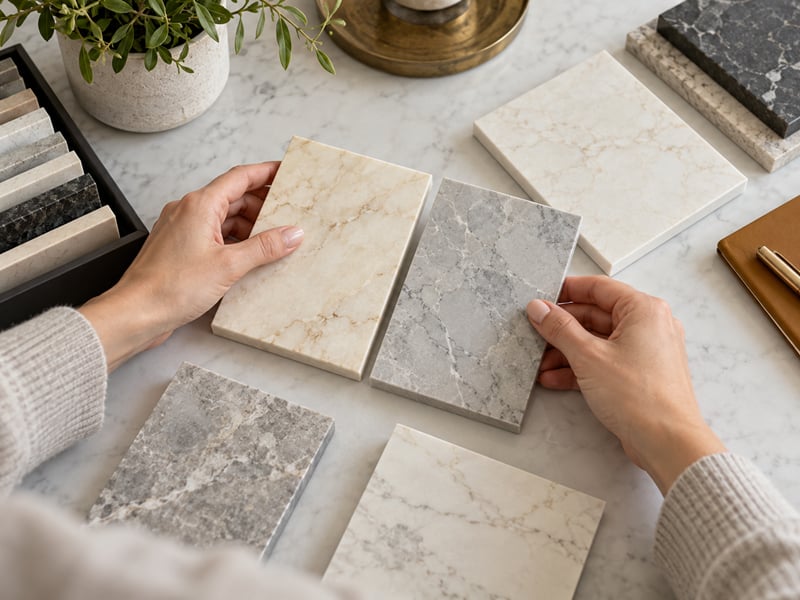
Review samples and available slab photos to confirm the color range, surface finish and overall appearance of your selected stone.
- 05
Confirm Fabrication Details
Work with our team to confirm dimensions, edge profiles, cutouts and vein direction before fabrication begins.

- 06
Confirm Your Order
Finalize the specifications, quantities, payment terms and production schedule so your order can move forward with clear requirements.

- 07
Production & Fabrication
Your stone is cut, shaped and finished according to the confirmed specifications and approved drawings.

- 08
Quality Inspection
We check dimensions, surface finish, edges and overall workmanship against the confirmed order requirements before packing.

- 09
Protective Export Packing
Finished pieces are protected, labeled and packed according to the product type and agreed shipping requirements.
- 10
Shipping & Order Support
We coordinate shipment arrangements and documentation, and stay in touch to support delivery questions and feedback after arrival.

Get Samples & Quotation
Send your material reference, drawings, dimensions, finish, quantity and destination. These details help define the sample and quotation request.
STOOANCE product enquiries
Project details and material references are welcome.

Turkish Roman Travertine Tiles: A Buyer’s Guide to Specification and Sourcing
Use this guide to decide whether the stone suits your project, specify the right finish and fabrication, compare suppliers, and avoid costly mistakes in sample approval, quality checks, and international delivery.
What Are Turkish Roman Travertine Tiles?
Turkish Roman Travertine Tiles are beige natural travertine tiles offered in project-customized sizes. The listed thickness is 18 mm, with other thicknesses available for review against the selected material and order requirements. Confirm the final dimensions and thickness before production.
Natural travertine has visible pores, veining, and fissures; color and pattern can vary between tiles and batches. Review the actual sample or selected batch when appearance across a floor or wall matters. ‘Roman’ is a commercial product name and does not, by itself, verify a quarry location or geological origin.
How the Roman Travertine Look Evolved
Ancient Rome used travertine extensively in monuments and civic architecture; the Colosseum is a prominent example. The stone’s pale, layered appearance and visible pores became closely associated with Roman design. That history describes an architectural tradition, not the origin of these tiles.
Contemporary interiors use travertine’s warm beige tones and linear movement to add texture to walls and floors. For Turkish Roman Travertine Tiles, assess the look against the approved batch because color, pores, and veining vary naturally. Confirm any claimed extraction site through batch documentation.
Visual Types of Turkish Roman Travertine Tiles
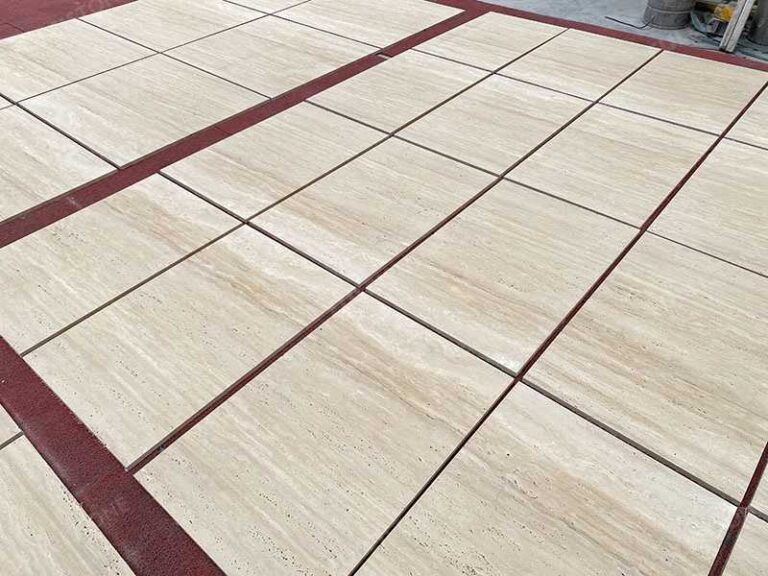
Turkish Roman Travertine Tiles are listed in beige, but the installed look depends on the approved batch. Compare current batch photos or a dry lay under consistent lighting before fixing the layout.
Beige Color Range
Beige may appear warmer, cooler, lighter, or darker across tiles. Compare several tiles together; a single sample cannot show the full floor or wall.
Vein and Cut Direction
Travertine veining can read as linear bands or a less directional pattern, depending on the cut. Check batch photos for vein orientation and dry lay adjoining pieces before approving the pattern.
Pores and Fill
Visible pores and any fill affect how uniform the polished face appears. Inspect close-up photos for pore size, distribution, and fill color across the selected tiles.
Tile-to-Tile Variation
Natural shifts in tone, veining, and pores become more apparent over a large area. Use a dry lay to distribute strong contrasts and identify any pieces needing a different position.
Where Turkish Roman Travertine Tiles Suit a Project
Turkish Roman Travertine Tiles are listed for indoor floors and wall cladding in a polished finish. Approval still depends on the actual batch, exposure, and project requirements.
| Application | Design and Maintenance | Approval Check |
|---|---|---|
| Indoor floor | Polished appearance; wear and cleaning | Traffic and slip requirements |
| Interior wall | Vein layout; accessible cleaning | Batch and fixing design |
| Wet or outdoor area | Water exposure; more frequent upkeep | Slip evidence, exposure suitability, local code |
Indoor Floors
Polished travertine suits floors where its appearance fits the design.
Confirm traffic, cleaning methods, and required slip resistance before specifying it.
Interior Wall Cladding
Wall cladding avoids floor wear but still exposes pores and fills.
Review the selected batch and maintenance access for each elevation.
Higher Exposure Areas
Wet areas, heavy traffic, and outdoor use need separate review.
Request relevant test evidence and check local codes before approval.
Choosing a Finish and Surface Treatment
Polished is the source-listed finish for Turkish Roman Travertine Tiles. Approve a finished tile from the selected batch under project lighting; beige tone, veining, and sheen can look different on site.
| Finish | Appearance | Buyer Check |
|---|---|---|
| Polished | Reflective | Assess floor slip |
| Honed | Matte | Confirm availability |
| Brushed | Textured | Confirm availability |
Polished Surface
Polishing brings out color and reflection. It also makes scratches and etching more visible under angled light.
Pores and Cleaning
Travertine pores may need filling or resin treatment. Confirm the treatment on the approved sample and specify a stone-safe cleaning method.
Floor Finish Selection
Floor applications need slip assessment for their actual conditions. Confirm whether honed, brushed, or another finish is available for the selected batch before specifying it.
Dimensions, Drawings, and Fabrication Details
Turkish Roman Travertine Tiles are listed with project-customized sizing and an 18 mm thickness. Lock fabrication decisions against the selected material and approved drawings.
Size and Thickness
18 mm is the source-listed thickness. Other thicknesses and achievable tile dimensions require material and drawing review.
Project schedules should state finished sizes, quantities, and agreed dimensional tolerances.
Layout and Edge Details
Floor and wall drawings should identify tile layout, joint widths, vein direction, and visual sequence.
Edge profiles and cutout locations should be marked and approved before cutting.
Cutting and Piece Numbering
STOOANCE uses approved shop drawings to guide cut-to-size fabrication.
Installation sequence should map each piece to its room or elevation; piece numbers then connect fabricated tiles to that plan.
Samples, Batch Approval, and Quality Inspection
A reference image sets the intended look for Turkish Roman Travertine Tiles. Approve actual material because a small sample cannot represent every tile’s color, pores, and veining.
Sample and Batch Selection
STOOANCE can provide a sample or images of a current batch. Remote video selection helps buyers assess color range, pores, and natural fissures across multiple pieces.
Approve the selected batch before production.
Pre-Production Approval
Sign-off should record the approved batch, drawings, dimensions, thickness, finish, edges, and any fill or resin treatment.
For layouts where tile placement matters, a dry lay helps confirm the arrangement before packing.
Inspection and Records
Final inspection should check dimensions, flatness, finish, edges, quantity, and labels against the approved order. Compare visible fill and fissures with the agreed material range.
Numbered photos and packing records help identify pieces on arrival.
How to Evaluate a Travertine Supplier
For Turkish Roman Travertine Tiles, evaluate the supplier’s access to the selected batch and its ability to deliver the approved specification. Request evidence tied to your order.
Material Access and Traceability
STOOANCE works with quarry owners and resource partners in Turkey; quarry ownership should not be assumed. Ask for current stock confirmation, batch identification, and photos of the actual material.
Fabrication and Inspection
STOOANCE’s Shuitou factories offer cut-to-size fabrication and drawing-based production. Confirm drawing review, finish and edge details, then request inspection photos covering dimensions, appearance, numbering, and packing.
Packing and Change Control
A packing plan should match labels to rooms, elevations, or installation sequence. Before approval, confirm the production schedule, applicable documents, and destination requirements; require written notice when the batch or specification changes.
Common Buying Mistakes and Shipping Risks
Catalog photographs cannot define the accepted range of natural travertine. Disputes often begin when batch variation, fabrication details, or delivery responsibilities remain unspecified.
Approve the Actual Batch
Approve actual batch samples or photographs and record acceptable beige variation, pores, and filled areas.
Mixed batches need a written range agreement before tiles are cut or packed.
Specify the Installed Result
Polished Turkish Roman Travertine Tiles require review against the floor’s use, including applicable slip requirements.
Drawings should fix finish, exposed edges, spare pieces, and installation sequence before fabrication.
Protect and Check the Shipment
Crates need suitable protection and labels keyed to rooms or installation sequence.
Agree shipping terms and inspection responsibilities; photograph crate damage on arrival and report discrepancies promptly.
Steps to Place a Project Order
STOOANCE starts a project inquiry with reference images and the intended floor or wall application. Send dimensions, drawings, quantity, destination, and required schedule together.
Confirm Material and Batch
STOOANCE checks current availability for the requested thickness and finish, then provides material images or samples for approval. Confirm the selected batch before fabrication.
Approve Production and Terms
Approved drawings should fix dimensions, edges, and finish. Agree the inspection scope, packing, Incoterm, and payment terms in the order contract.
Review Before Dispatch
STOOANCE can provide inspection photos or video, piece numbering, and packing records for review before dispatch. Qualified local contractors normally handle overseas installation; record all order-specific commitments in the contract.
Pricing and Total Landed Cost
STOOANCE confirms prices, minimum order quantity, and lead times through a current, order-specific quote. Compare total landed cost per installed square meter, including freight, duties, taxes, and an allowance for cutting and breakage waste.
| Cost factor | Quote information needed | Cost or timing effect |
|---|---|---|
| Material batch | Approved sample or batch; required color range | Selection and available yield affect price and schedule |
| Tile size and thickness | Dimensions, thickness, and drawings | Larger formats or custom thickness may increase cutting waste |
| Finish and fabrication | Polished finish, edges, and cutouts | Additional processing adds cost and production time |
| Order quantity | Total area and piece counts | Volume affects unit cost and production planning |
| Packing | Crate type and labeling requirements | Protection adds cost but helps limit transit damage |
| Delivery term | Destination and EXW, FOB, CIF, or DDP term | Freight, duties, and taxes vary by route and term |