
Unfilled Honed Roman Travertine Tiles
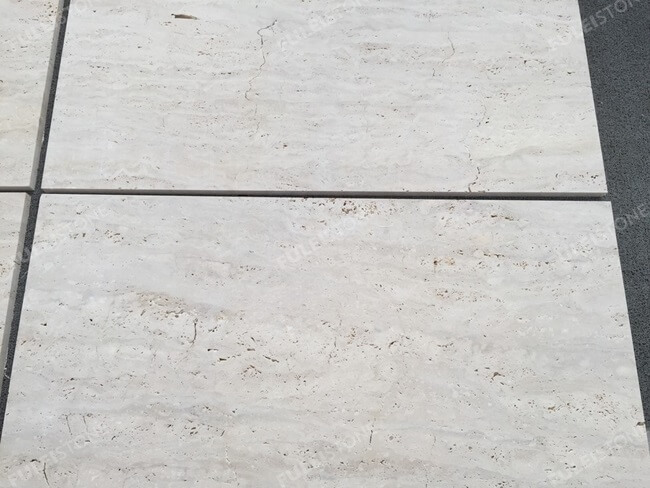
Bring a warm beige natural stone finish to indoor spaces with STOOANCE Unfilled Honed Roman Travertine Tiles. The honed surface has a matte appearance, while the unfilled finish leaves the stone’s natural pores visible. Colour, veining, pores and fissures vary, so approve the actual sample or batch before production.
The listed thickness is 18 mm, with tile dimensions customized for the project. Share your drawings, intended application and quantity so STOOANCE can confirm the material, finish, fabrication details and packing requirements.
- Beige travertine with an unfilled, honed matte finish
- Listed for indoor use at 18 mm thickness
- Project dimensions confirmed from drawings
- Remote material selection and batch review available
- Inspection photos, numbering and packing records available according to the order
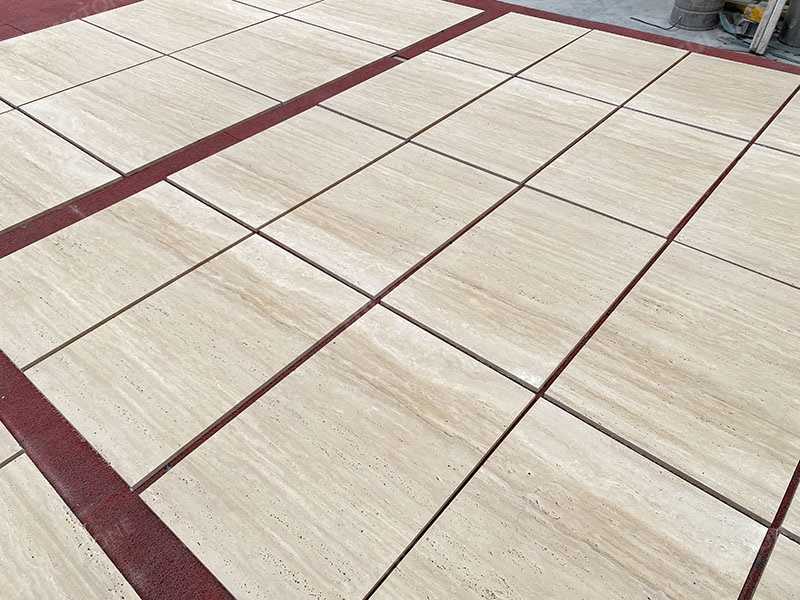
Beige Roman Travertine: Open Pores and Natural Variation
STOOANCE’s Unfilled Honed Roman Travertine Tiles are listed in a beige travertine product family. “Unfilled” describes a face that retains visible natural pores rather than presenting a uniformly filled surface. The openings are part of the material’s appearance, and their size and distribution should be assessed on the actual stone.
Beige tone, veining, pores and natural fissures can vary from tile to tile and between batches. A small reference sample may show the general character but cannot establish the full range for an order. Review current material or batch photos, and agree on an acceptable colour and pore range before production.
“Roman Travertine” is the product’s commercial name; it does not, by itself, establish quarry origin. If origin or a particular visual match matters to the specification, ask STOOANCE to verify the selected material and document the approved batch.
Request a Quote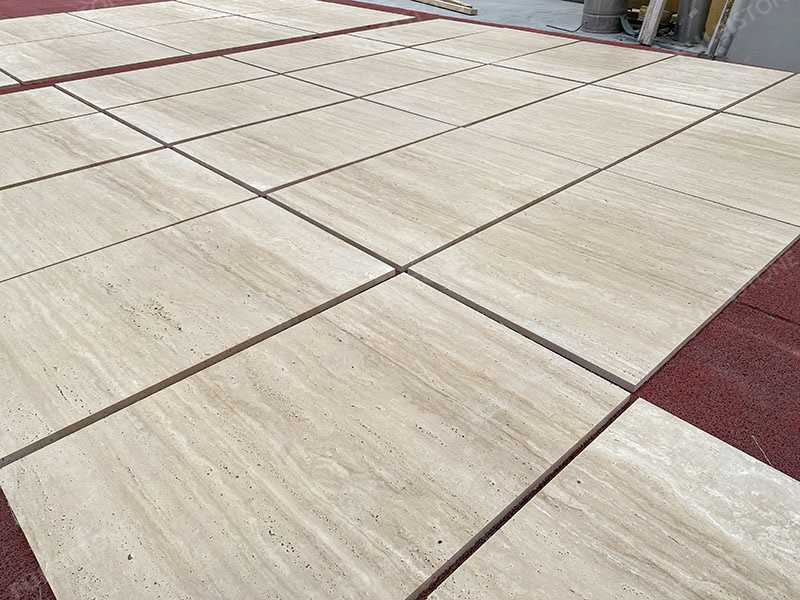
Tile Specifications for Project Planning
Unfilled Honed Roman Travertine Tiles are offered in project-customized sizes. The product information does not establish a standard length or width, so a tile schedule or dimensioned drawings are needed to define the order.
Source-listed specifications. Attribute: Thickness; Specification: 18 mm. Attribute: Finish; Specification: Honed / matte. Attribute: Size; Specification: Project customized.
For a quotation, provide the required dimensions and quantities, along with any edge details, cutouts and layout drawings. STOOANCE can review the cutting requirements against the selected material before production. Confirm the approved thickness and finish on the order documents; fabrication tolerances have not been provided and should be agreed for the project.
A honed finish describes the intended matte appearance. It does not establish a slip rating or suitability for a particular traffic level. If the specification requires either, request applicable test documentation for the selected material and confirm the project's requirements before ordering.
Request a Quote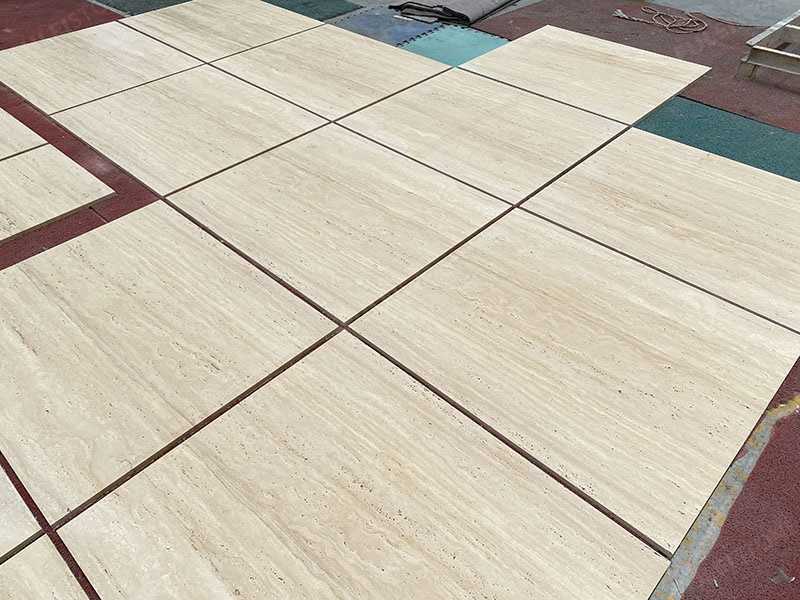
Indoor Spaces and Coordinated Stone Layouts
Unfilled Honed Roman Travertine Tiles can be considered for interior walls, feature areas, and floors where the project specification supports their use. The open pores are part of the intended appearance, so review the actual material in the context of the room. For floors, wet areas, or heavy traffic, the designer and local installer should confirm suitability, slip requirements, and the proposed maintenance approach before approval.
Plan the tile layout alongside lighting, adjacent finishes, grout color, and transitions to other floor or wall materials. The direction and distribution of the stone’s natural markings can affect how a large surface reads, especially across adjoining rooms or a prominent wall. A layout drawing helps establish where cuts, joints, borders, and visible edges will fall.
For projects covering multiple spaces, share room plans and elevation drawings with STOOANCE so tile quantities and layout intentions can be coordinated with fabrication. Review the selected material against the design palette before production. Installation methods and site preparation should be agreed with the qualified local contractor.
Request a Quote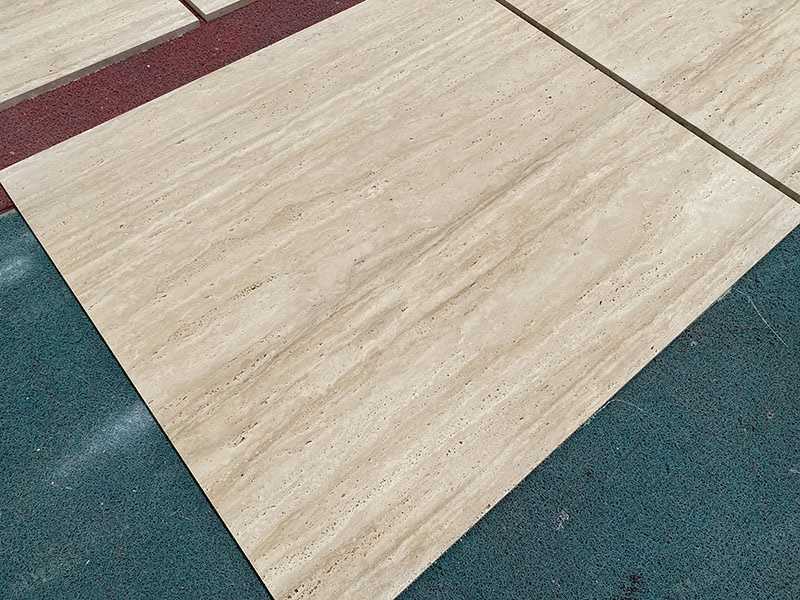
Drawing-Based Cutting and Fabrication Details
STOOANCE can fabricate Unfilled Honed Roman Travertine Tiles to project drawings. Before cutting, its team reviews each piece against the proposed layout so dimensions, joints, edges and openings are clear. The cutting method is selected to suit the approved material and the required shapes.
For a fabrication review, provide:
- Dimensioned plans or shop drawings with a piece schedule and quantities.
- The tile layout, joint positions and any required direction for the stone’s visible pattern.
- Details of exposed edges, corners, returns and transitions to adjoining materials.
- Locations and dimensions of openings or shaped cuts, with the required edge detail around each one.
These details help STOOANCE assess whether straight cutting, waterjet cutting, CNC shaping or edge profiling is appropriate. Because the tiles are specified as unfilled, confirm how visible pores and any exposed cut edges should be handled before approving fabrication. Final dimensions, tolerances and fabrication details should be agreed from the drawings and selected material.
Request a Quote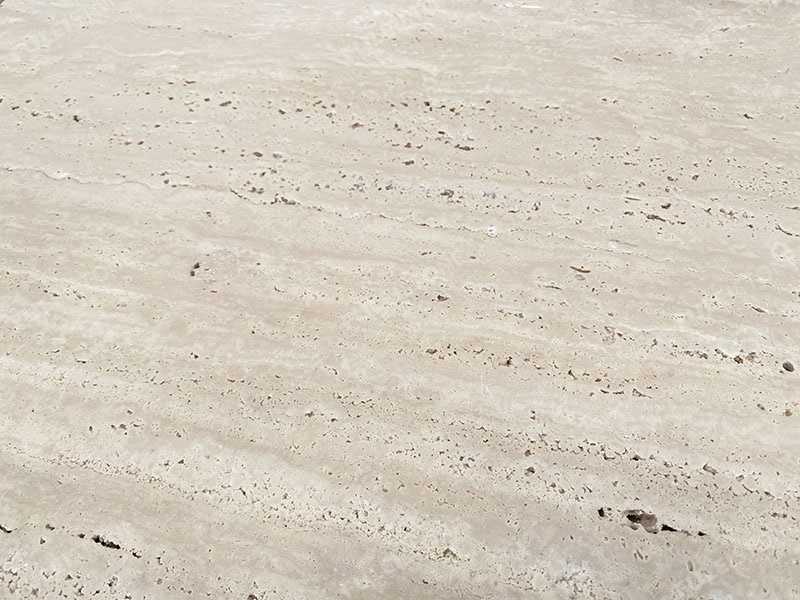
Batch Approval, Inspection and Numbered Packing
For Unfilled Honed Roman Travertine Tiles, approve the actual sample or selected batch before production. Review the beige color range, veining, open pores and natural fissures on the material proposed for the order. A small reference image cannot establish the appearance of every tile.
- Confirm the approved batch, quantities and any agreed range of natural variation.
- Set the inspection criteria from the order: dimensions, thickness, flatness, honed finish and edge quality.
- For drawing-based layouts, agree on tile orientation, piece numbers and labels before packing.
- Review inspection photos or video and packing records according to the agreed order requirements.
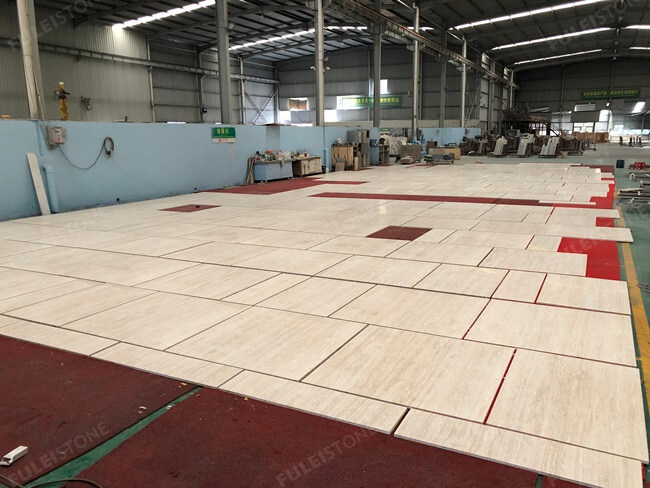
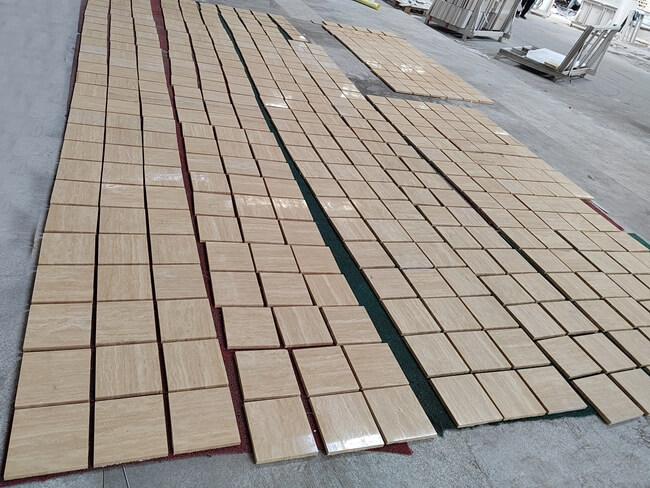
STOOANCE can organize dry lay and numbered packing when the layout calls for them. Packing method and label sequence should match the drawings and installation plan so the receiving contractor can identify each piece. Confirm these requirements, along with the final inspection plan, before production.
Request a QuoteTechnical Specifications
Product Information
- Product
- Unfilled Honed Roman Travertine Tiles
- Material / Category
- Travertine
- Material
- Marble
- Color
- Beige
- Size
- Project Customized Size
- Thickness
- 18mm
- Finish
- Honed / Matte
- Location
- Indoor
Order Confirmation
- Selected Material
- Approve the actual material, batch or sample before production
- Custom Fabrication
- Dimensions, thickness, finish, edges and cutouts are confirmed from drawings
- Quality Records
- Inspection photos or video, labels, numbering and packing records are available according to the order
Unfilled Honed Roman Travertine Tiles FAQ
Review these common sourcing questions, then send your project requirements for a product-specific quotation.
Request a QuoteWhat does “unfilled” mean for the appearance of these travertine tiles?
“Unfilled” means the travertine’s natural pores remain visible on the tile face, giving it a more open, textured appearance than a filled surface. These beige tiles have a honed, matte finish, but pore size, pattern, and color will vary across the stone. Before ordering, ask STOOANCE to show the actual batch or a sample and confirm that its appearance suits your indoor application. If an even surface is essential, discuss whether a filled option would be more suitable.
How much variation in color, pores and veining should buyers expect?
Expect visible variation in beige color, pores, and veining between tiles and batches. For these unfilled, honed Roman travertine tiles, the pores remain part of the appearance, but their size and distribution must be assessed on the actual material. A small sample may not show the full range. STOOANCE supports remote batch selection by photo or video and checks color range and natural fissures during quality control. Before production, approve the selected batch and agree on an acceptable visual range.
Is 18 mm the required thickness, or can another thickness be requested?
18 mm is the listed thickness for these Unfilled Honed Roman Travertine Tiles, but you can request another thickness. STOOANCE offers drawing-based custom fabrication and confirms thickness against the selected material, batch, dimensions, finish, and production requirements. An alternative thickness is therefore a request, not a confirmed option. Send your required thickness, tile sizes, quantity, application, and drawings so STOOANCE can check feasibility and quote the approved specification.
Can the tiles be cut to dimensions shown on project drawings?
Yes. STOOANCE offers cut-to-size fabrication, and these Unfilled Honed Roman Travertine Tiles are listed in project-customized sizes. Send the project drawings so STOOANCE can confirm the dimensions, 18 mm listed thickness, honed finish, edges, and any cutouts before production. Final sizes and tolerances depend on the approved material, drawings, and fabrication review. The next step is to provide the drawings, required quantity, and destination for a feasibility check and quotation.
What should be checked before specifying these tiles for an indoor floor?
Before specifying these tiles for an indoor floor, check whether the unfilled pores and honed surface suit the room’s traffic, cleaning routine, and slip resistance requirements. Review an actual batch for beige color variation, veining, pores, and natural fissures. Confirm the project’s tile sizes, the listed 18 mm thickness, edge details, substrate, and installation method against the drawings. STOOANCE supports remote batch selection and inspection photos or video. Request any required performance documentation, then approve the batch and maintenance plan before ordering.
Can STOOANCE arrange remote material selection for Unfilled Honed Roman Travertine Tiles?
Yes. STOOANCE supports current-stock checks, remote video selection, batch reservation, and photo or video records. Current availability and the final approved batch must be confirmed before production.
How does STOOANCE control quality before shipment?
STOOANCE checks the approved sample or batch, drawings, dimensions, thickness, finish, edges, colour range, natural fissures, resin treatment, flatness, quantities, numbering, labels, and packing. The inspection plan is matched to the order and application.
Are stone samples free?
Samples are free. The buyer pays the courier charge in advance, and that courier cost can be credited after a formal order is placed.
What information is needed for a quotation?
Send the material or reference image, dimensions, thickness, finish, quantity, edge details, drawings, packing requirements, destination, and schedule. STOOANCE then confirms the suitable supply and fabrication route.
Stone Options for Your Project
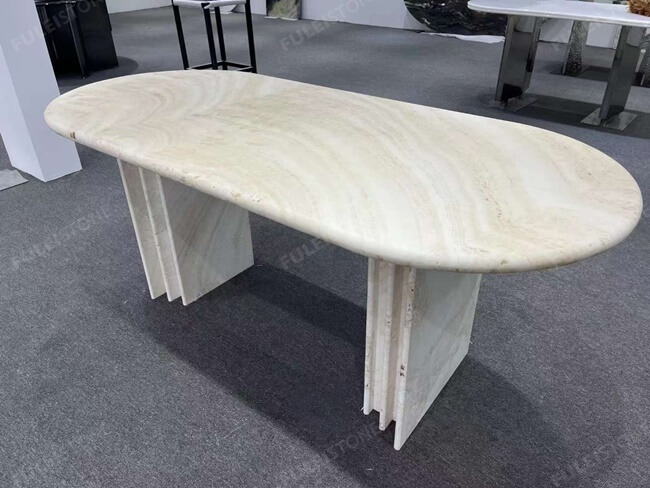
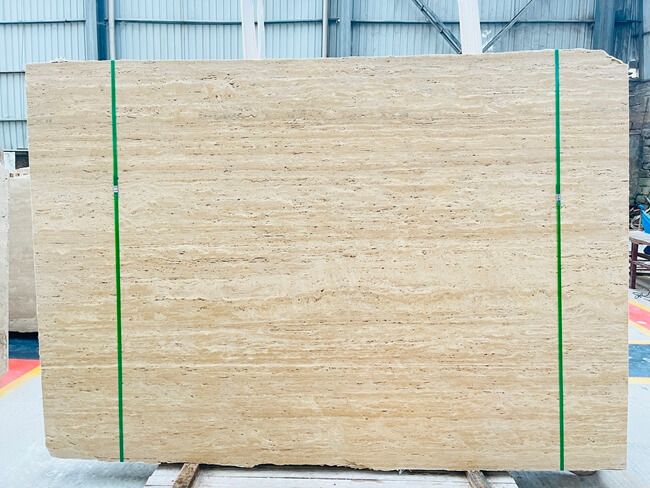
A coordinated stone project brings material selection, cutting details and finished components together. The reference examples show slab layouts, cut-to-size pieces, countertops and decorative stonework. Use them to explain the shapes, edge profiles and visual direction you would like to explore. Each requested item needs its own review of material suitability, dimensions, finish and installation requirements; a photograph alone does not confirm that every option is available for your selected stone.
Share a room schedule or drawing set with the areas, quantities and details you need. Then confirm the scope for samples, vein direction, cutting, inspection and packing before placing an order. Keep approved material references and drawings with the quotation so the finished pieces can be checked against the same requirements. Product-specific availability, technical evidence, commercial terms and delivery arrangements are confirmed separately for each enquiry.
Get Samples & Quotation

HOW WE WORK
A Clear Path from Enquiry to Delivery
From your first enquiry to arrival checks, use these ten stages to agree the details of a stone order. Images below are workflow illustrations, not factory photographs.
- 01
Share Your Brief
Identify the product, application, quantity and destination.

- 02
Review Material Options
Compare representative images and the available finish choices.

- 03
Request a Quotation
Confirm the included scope and any exclusions in writing.

- 04
Approve Samples
Review the color range, surface and visible variation.

- 05
Check Drawings
Confirm dimensions, seams, edge profiles and piece marks.

- 06
Confirm the Order
Agree specifications, responsibilities and commercial terms.

- 07
Review Fabrication
Use the approved drawings and recorded material selection.

- 08
Arrange Inspection
Check dimensions, visible finish and agreed acceptance points.

- 09
Confirm Packing
Match protected pieces and crate labels to the packing list.

- 10
Coordinate Delivery
Confirm shipping documents, unloading and arrival checks.

Get Samples & Quotation
Send your material reference, drawings, dimensions, finish, quantity and destination. These details help define the sample and quotation request.
STOOANCE product enquiries
Project details and material references are welcome.

Unfilled Honed Roman Travertine Tiles: A Project Buyer’s Guide
Use this guide to decide where these tiles belong, compare finish and specification choices, assess supplier controls, and avoid costly mistakes in sample approval, fabrication, inspection, and international delivery.
What Are Unfilled Honed Roman Travertine Tiles?
Roman travertine is a trade name for travertine, a natural stone with pores formed during deposition. On Unfilled Honed Roman Travertine Tiles, those pores remain visibly open rather than being filled with resin or cement; honing gives the stone a smooth, matte face without removing its natural variation.
STOOANCE lists this product in beige, at 18 mm thickness, in project customized sizes, and for indoor use. The product source also labels the material as marble, so buyers should confirm the commercial stone name and geological classification against the selected batch before approving a specification. Review an actual sample to judge pore size, color range, and the honed finish.
Where Do Unfilled Honed Roman Travertine Tiles Work Best?
Unfilled Honed Roman Travertine Tiles are listed for indoor use. Choose locations by exposure to grit, water, acidic cleaners, and the owner’s willingness to maintain open pores.
Interior Walls
Interior feature walls and dry-area bathroom walls keep foot traffic out of the equation. Open pores remain visible, so confirm whether routine dusting and occasional deeper cleaning suit the space.
Beige travertine can vary across a wall. Review the actual batch for acceptable color and pore distribution.
Indoor Floors
Residential floors with manageable traffic may suit the honed finish if the owner accepts regular cleaning. Open pores can trap grit and spills; vacuum or sweep before damp cleaning with a stone-compatible product.
Acidic cleaners and spills may etch travertine. Avoid specifying it where aggressive cleaning is routine without agreeing on a maintenance plan.
Applications Requiring Review
Wet areas, demanding commercial floors, and outdoor installations need project-specific review. Confirm exposure, cleaning methods, installation details, and any required slip testing before approval; a honed finish alone establishes no slip rating.
How Do Cut and Pattern Change the Appearance?
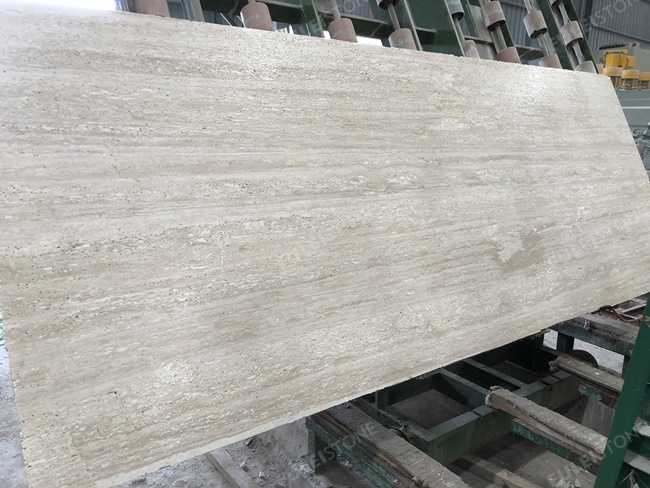
Unfilled Honed Roman Travertine Tiles can read as orderly bands or a softer, mottled field. The selected block determines which cuts and formats are feasible.
Vein Cut and Cross Cut
Vein cut typically exposes long, parallel bands that emphasize direction.
Cross cut usually produces a more cloudlike pattern. Ask STOOANCE to confirm which cut the selected material supports.
Layouts and Tile Sizes
Directional layouts can run bands along a corridor or across a room to change its visual width.
Mixed tile sizes and cut to size pieces can create a less repetitive field where block dimensions and yield permit.
Approve the Actual Batch
Actual batch photos reveal the color range, veining, open pores, and fissures a small sample may miss.
A proposed layout lets buyers approve band direction and piece placement before cutting; confirm available formats before specifying them.
Unfilled Honed Roman Travertine Tiles Versus Alternative Finishes
Unfilled Honed Roman Travertine Tiles retain open pores and a matte face. Filled honed, polished, and brushed options change the look and cleaning routine; compare samples from the actual batch.
| Option | Appearance | Pores and cleaning | Consideration |
|---|---|---|---|
| Unfilled honed | Matte, visibly open | Exposed; clean voids | Interior detail |
| Filled honed | Matte, smoother-looking | Filled; check upkeep | Confirm fill |
| Polished | Reflective | Varies by fill; wipe spills | Confirm application |
| Brushed | Textured matte | Varies by fill; clean texture | Review sample |
Open Pores And Cleaning
Unfilled pores can trap dust and spills. Agree on the cleaning method and whether open voids suit the intended interior surface.
Fill And Surface Approval
Filled tiles need an approved fill type and color. Confirm finish availability and any proposed treatment against the selected material.
Floor Suitability
Honed describes surface appearance, not slip suitability. For floors, assess the installed condition against applicable local requirements.
Which Dimensions and Drawings Must Buyers Confirm?
STOOANCE lists these tiles at 18 mm thickness with project customized sizing. Confirm the final dimensions and acceptable thickness tolerance before approving production.
Tile Sizes and Thickness
18 mm is the listed thickness; specify each tile’s length and width on the order.
STOOANCE should confirm achievable dimensions and thickness tolerance against the selected batch and fabrication plan.
Edges, Joints, and Grain
Edge details and intended joint width affect the cut size and finished layout. Show both on the drawings.
Grain direction should be marked for each area where visual alignment matters, especially across adjoining tiles.
Approved Drawings and Installation Conditions
Room or elevation schedules should state quantities, piece locations, and any special cuts.
Approved shop drawings should reflect substrate levels, installation method, and required clearances before fabrication. Have the local installer resolve site conditions and approve the final layout.
How Should Unfilled Honed Roman Travertine Tiles Be Sampled?
Unfilled Honed Roman Travertine Tiles should be approved against actual material before production. A small sample establishes the intended look; current-batch evidence shows the range a shipment may contain.
Compare the Sample With the Batch
Request a representative tile showing the honed surface and open pores. Compare it with current-batch photos or video under consistent lighting.
Approve a beige color range and acceptable pore size and distribution, rather than expecting every tile to match the sample.
Record the Fabrication Standard
The product listing specifies 18 mm thickness and a honed matte finish. Confirm the selected batch, actual thickness, edge treatment, and any project drawings in the approval record before cutting.
Keep the approved sample or dated images as a reference for production review.
Review Large Layouts
For broad floors or walls, approve a site mockup or request a dry lay review before shipment. Check how light and dark tiles and prominent pores sit together.
Natural batch variation remains possible within the agreed range; record any pieces that fall outside it.
What Quality Checks Matter Before Shipment?
STOOANCE checks Unfilled Honed Roman Travertine Tiles against the approved sample, drawings, and agreed acceptance criteria. Buyers should review the same batch and finish standards at each inspection stage.
Before Production
The approved batch establishes the acceptable beige color range, visible pores, and natural fissures. STOOANCE records the selected material and confirms dimensions, 18 mm thickness, finish, edges, and piece schedule before cutting.
Reference photos help remote buyers confirm that production starts from the agreed material.
During Fabrication
Cut tiles are checked for dimensions, thickness, flatness, edge quality, and honed finish consistency. Pores and fissures are compared with the approved range; any proposed treatment should be agreed before it is applied.
Inspection video can show surface variation across several pieces.
Before Packing
Final inspection reconciles quantities and piece numbers with the cutting list and drawings. Labels link each piece to its room, elevation, or installation sequence where specified.
Packing photos and records let buyers verify the numbered contents and protective packing before shipment.
How Should Buyers Evaluate a Travertine Supplier?
Unfilled Honed Roman Travertine Tiles require batch approval because beige tone, open pores, and fissures vary naturally. Evaluate whether a supplier can connect the approved material to fabrication and shipment records.
Verify the Available Batch
STOOANCE can check current material availability and arrange remote video selection and representative samples.
Batch reservation depends on confirmed availability. Approve the actual lot before production.
Check Fabrication and Inspection
STOOANCE’s three Shuitou production bases support cut-to-size fabrication from approved drawings.
The listed 18 mm thickness, dimensions, edges, and honed finish should be confirmed for the order. Request inspection photos, piece labels, and packing records.
Confirm Delivery Requirements
Protective crates and corner protection should suit the tile format and shipping route.
STOOANCE can coordinate packing and delivery. Verify the production schedule, documentation scope, and contract terms for your order.
What Purchasing and Shipping Mistakes Cause Problems?
Unfilled Honed Roman Travertine Tiles are source-listed at 18 mm for indoor use. Purchasing problems often begin when visual approval substitutes for a complete specification.
Approve the Batch and Surface
A small sample is a reference, not a promise of uniform color or pores. Approve the actual batch through photos, video, or a dry lay.
Written specifications should state whether pores remain open or receive treatment, plus the required grain direction.
Resolve Drawings and Intended Use
Shop drawings should fix sizes, thickness, edges, cutouts, and piece locations before cutting. Missing details can leave pieces unusable on site.
An indoor listing does not establish suitability for exterior or wet areas. Obtain an application-specific review before ordering for either.
Control Dispatch and Receipt
After batch approval, review inspection records and agree on crate type, protection, labels, and numbering by room or elevation. Confirm shipping terms and destination before dispatch.
At receipt, compare crate condition, counts, and labels with the packing list. Photograph visible damage and record discrepancies promptly.
What Determines the Price of Unfilled Honed Roman Travertine Tiles?
STOOANCE quotes Unfilled Honed Roman Travertine Tiles against the selected batch and fabrication scope. Submit the approved sample, tile dimensions, thickness, quantity, finish, edge details, packing requirements, and destination to compare offers.
EXW, FOB, CIF, and DDP cover different delivery scopes, subject to order review. Compare the product quote separately from packing, freight, duties, and local handling on the same Incoterm basis.
| Cost component | Quotation impact |
|---|---|
| Selected batch | Color range and pore structure affect selection and yield. |
| Tile size and thickness | Custom formats and thickness affect material use. |
| Cutting yield | Vein direction and defect avoidance affect usable output. |
| Honing and edges | Finish consistency and edge work depend on specifications. |
| Inspection and packing | Records, numbering, and protection are quoted per order. |
| Shipping terms | Freight and destination charges depend on the agreed Incoterm. |