
Unpolished and Unfilled Roman Travertine Tils
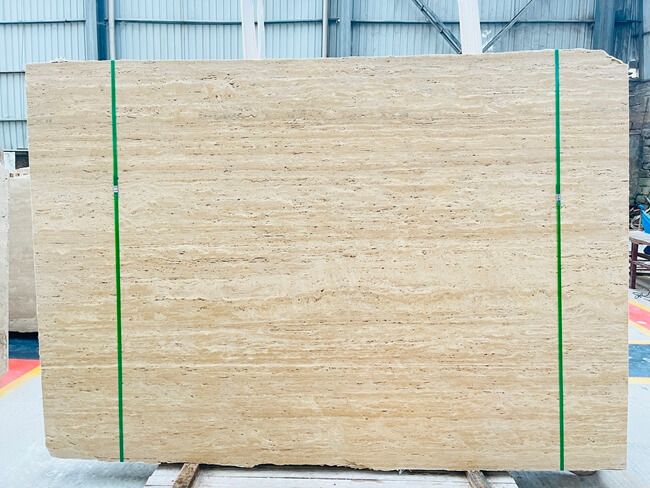
These beige travertine tiles have a saw-cut, unpolished surface and an unfilled appearance. Natural color variation, veining, pores, and fissures should be reviewed on samples from the selected batch. STOOANCE offers project-customized sizes, with 18 mm, 20 mm, and 30 mm thicknesses listed for this product.
The tiles are listed for floors and wall cladding in indoor and outdoor settings. Confirm the application, finish, dimensions, and any project-specific performance requirements before production. STOOANCE can support remote material selection and drawing-based fabrication.
- Beige travertine with a saw-cut, unpolished finish
- Unfilled appearance; approve the actual batch or sample
- Project-customized sizes; listed thicknesses of 18, 20, and 30 mm
- Inspection photos or video, piece numbering, and packing records available according to the order
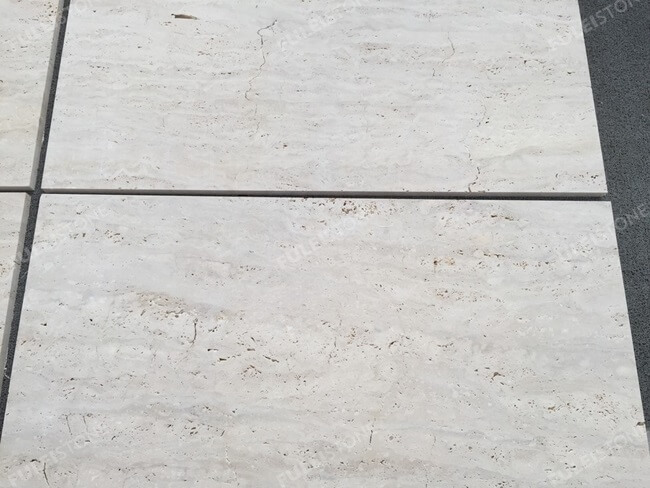
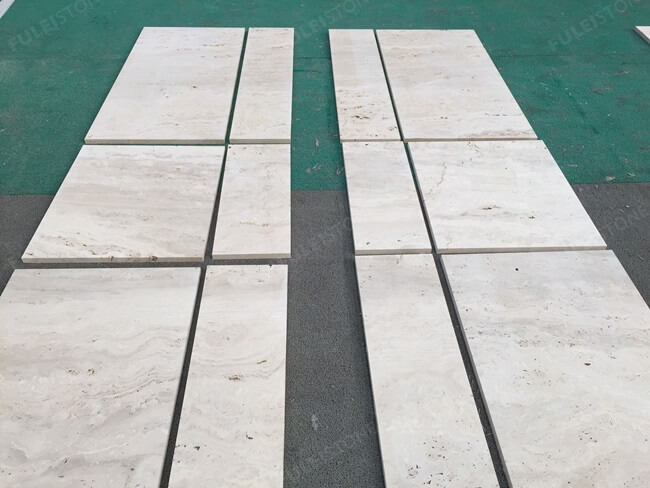
Saw-Cut Texture and Unfilled Travertine
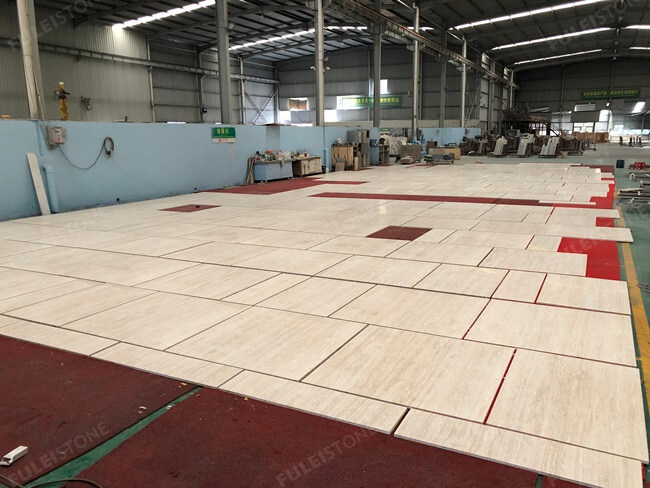
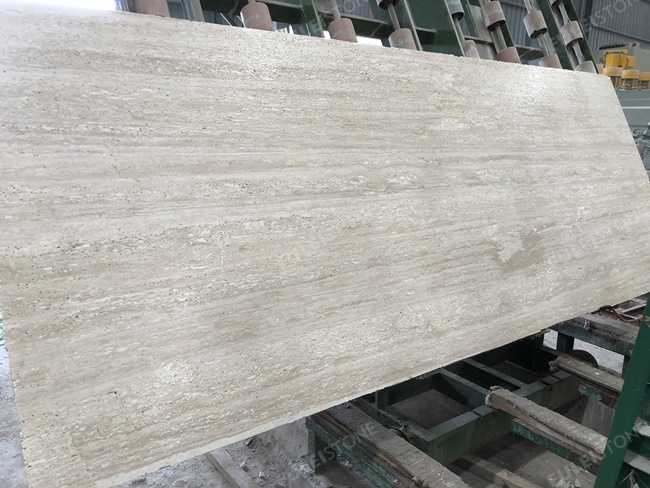
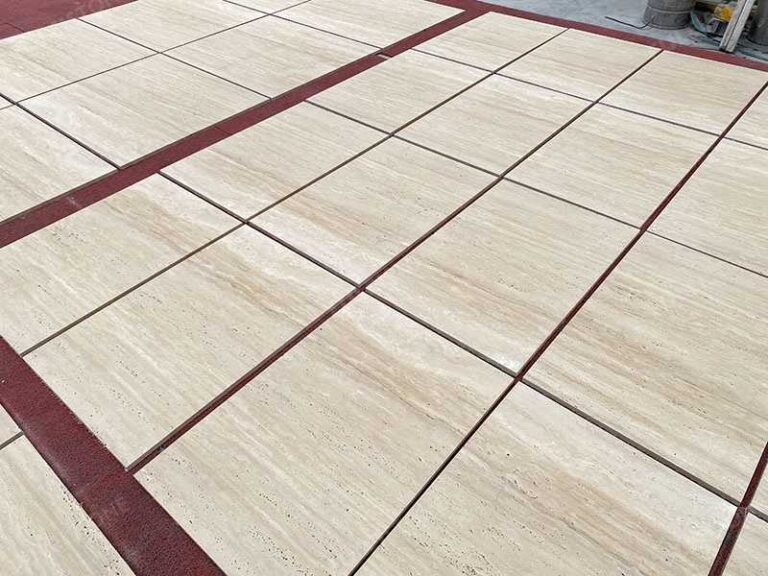
These beige Roman travertine tiles are specified with a saw-cut, unpolished finish and an unfilled surface. The saw-cut finish leaves the face without a polished sheen; its exact texture should be reviewed on a sample from the proposed material. “Unfilled” means naturally occurring surface openings are left visible rather than filled to create a more uniform face.
Travertine varies from piece to piece. Beige tones, movement in the stone, pores, and natural fissures may differ across a batch. The size, number, and placement of visible openings should be assessed on the actual material, especially where adjacent tiles need a considered visual range.
Before approval, ask to see representative pieces in both dry and wet conditions if the finished appearance under moisture matters to the design. Confirm the acceptable color range, visible pores, fissures, and saw-cut texture against the selected batch. A small sample can show the surface character, while a broader batch review gives a better view of variation across an order.
Request a Quote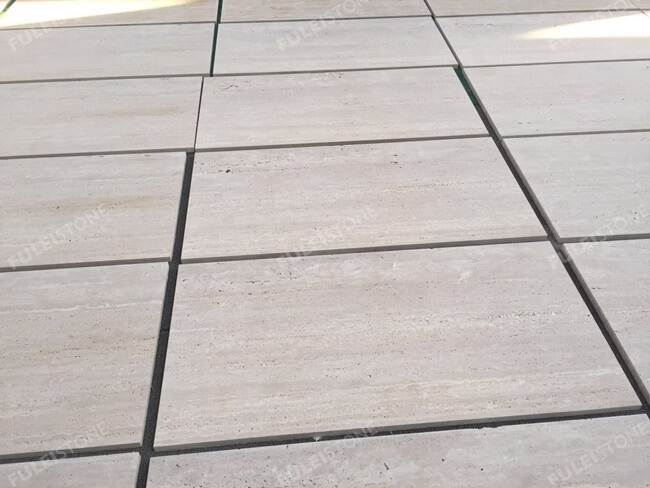
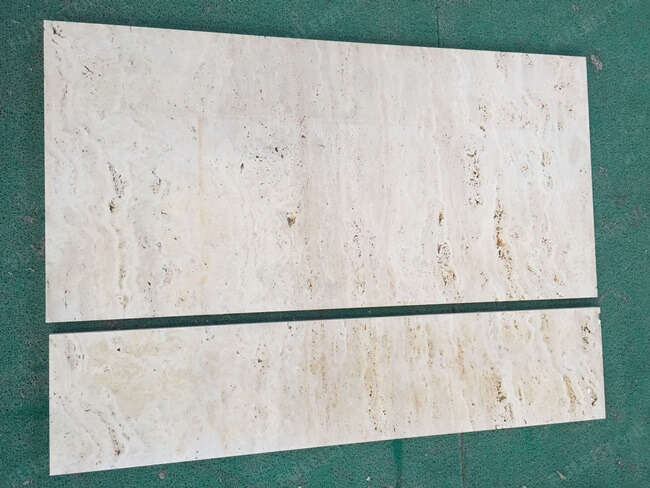
Tile Specifications and Custom Size Selection
STOOANCE lists this product as beige Roman travertine tiles with project-customized sizing. The options below describe the product listing; the actual material and production details should be approved for the order.
Source-listed product specifications. Attribute: Material; Listed specification: Travertine. Attribute: Color; Listed specification: Beige. Attribute: Size; Listed specification: Project-customized. Attribute: Thickness; Listed specification: 18 mm, 20 mm, or 30 mm. Attribute: Finish; Listed specification: Saw-cut, unpolished and unfilled.
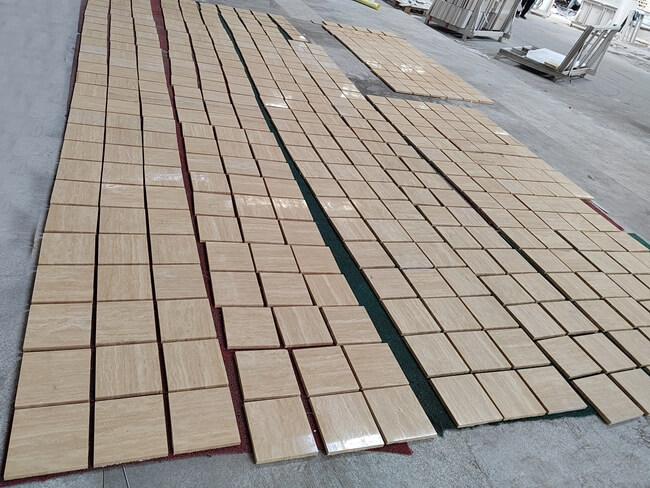
To select a tile size, provide the finished length and width, required quantity, and a dimensioned layout or cutting schedule. Include any border pieces, changes in tile direction, or areas requiring matching dimensions. STOOANCE can review the drawings against the selected material and batch before confirming the cutting plan.
Specify which listed thickness is required for each tile format. Final dimensions, thickness, edges, and acceptable tolerances need to be agreed from the drawings and intended application before production. Natural color and pattern can vary between pieces, so approve the actual sample or batch when visual continuity matters.
Request a Quote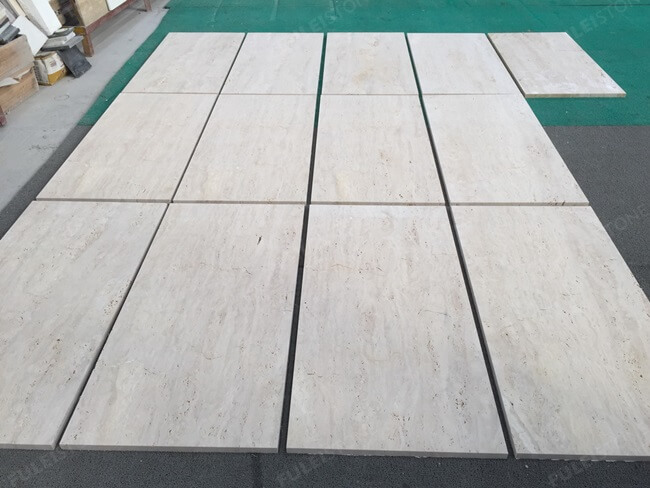
Reviewing Indoor and Outdoor Applications
These beige Roman travertine tiles are listed for floors and wall cladding in indoor and outdoor settings. An application review should begin with the exact location and how the surface will be used. A sheltered interior wall, a busy floor and an exposed exterior area place different demands on the stone and its installation.
For floors, share the expected foot traffic, whether the area may become wet, and the planned cleaning routine. For exterior floors, also identify the local climate, drainage conditions and any slip-resistance requirements. For wall cladding, provide the wall construction, fixing method and exposure conditions. The project designer and qualified local installer should confirm suitability, installation details and any required testing before the material is specified.
STOOANCE can review the proposed application alongside the selected material, sample and project drawings. Because these tiles are specified as saw-cut and unfilled, the team should also confirm whether that surface condition meets the project's use and maintenance needs. Final approval should be based on the actual batch and the requirements of the installation site.
Request a Quote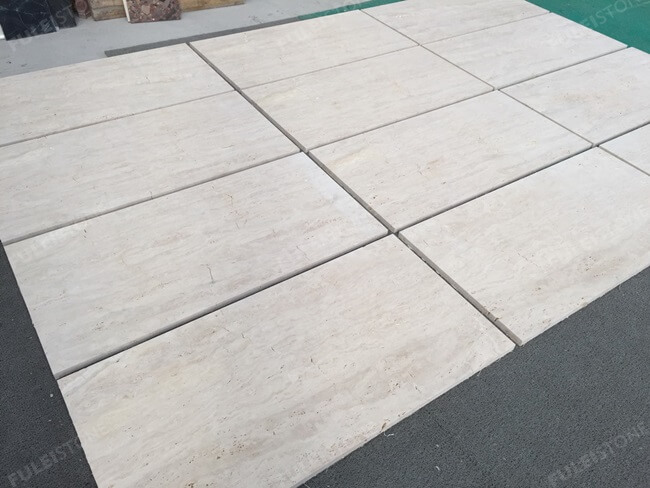
Drawing-Based Cutting and Fabrication
STOOANCE can fabricate these Roman travertine tiles to project drawings, subject to review of the selected material and the required cuts. A coordinated drawing set helps turn a custom-size request into pieces that can be identified and placed on site.
For a fabrication review, provide:
- A dimensioned tile layout showing each piece and its intended location.
- Details of openings, corners, returns, and any shaped cuts.
- Edge profiles and which edges will remain visible.
- The requested vein direction and any areas where adjacent pieces should be coordinated.
STOOANCE reviews the drawings against the approved material and confirms the cutting approach before production. Depending on the details, fabrication may involve bridge cutting, waterjet cutting, or CNC shaping. Piece numbers can follow the drawing or installation sequence, giving the local installer a clear reference for placement. Confirm achievable details and tolerances against the actual batch and final shop drawings.
Request a Quote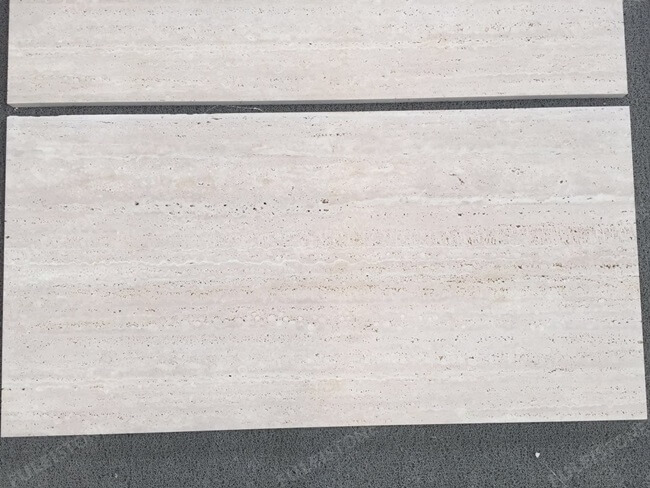
Batch Approval and Pre-Shipment Inspection
Before production, STOOANCE asks buyers to approve a sample or the selected batch of Roman travertine. Remote video selection and photographs can help buyers review the beige color range, veining, open pores, and natural fissures in the actual material. The approved reference and any agreed limits for visual variation should be recorded before cutting begins.
The inspection plan is set against the order, drawings, and intended application. For these saw-cut, unfilled tiles, STOOANCE checks that the supplied finish and pore treatment match what was approved. Pre-shipment checks also cover dimensions, thickness, flatness, edges, quantities, and any agreed piece numbering. Acceptance tolerances and any treatment of individual fissures should be confirmed for the selected batch and project requirements.
Buyers can request inspection photos or video, together with labels, numbering, and packing records as specified in the order. Reviewing those records before shipment gives both parties a clear basis for resolving questions about the batch or fabricated pieces. Send the approved sample reference, drawings, and inspection requirements when placing the order so the checks reflect what your project needs.
Request a Quote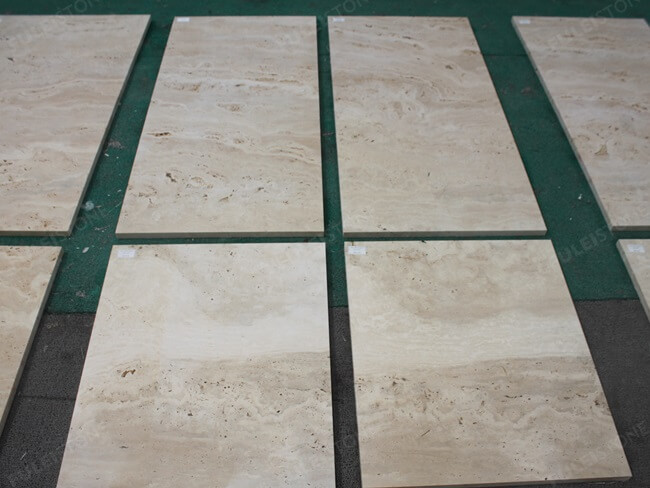
Packing and Order Planning for Roman Travertine
For unpolished, unfilled Roman travertine tiles, packing should be planned around the approved piece sizes, thicknesses, and shipment route. STOOANCE can use crates or cases with waterproof, foam, and corner protection as appropriate to the order. Packing method and crate contents are confirmed before production.
To prepare a packing and shipping plan, provide:
- Tile dimensions, selected thickness, total quantity, and any pieces with different sizes.
- Whether pieces need to be grouped and labelled by room, elevation, drawing, or installation sequence.
- Destination, unloading constraints, and any buyer requirements for crate size or handling.
- Requested shipping term and delivery schedule for review.
STOOANCE can provide labels, piece numbering, and packing records according to the order. The final packing arrangement, shipment route, and timing depend on the confirmed fabrication details and logistics requirements.
Request a QuoteTechnical Specifications
Product Information
- Product
- Unpolished and Unfilled Roman Travertine Tils
- Material / Category
- Travertine
- Material
- Travertine
- Color
- Beige
- Size
- Project Customized Size
- Thickness
- 18mm, 20mm, 30mm
- Finish
- Saw Cut
- Location
- Floor, Indoor, Outdoor, Wall Cladding
Order Confirmation
- Selected Material
- Approve the actual material, batch or sample before production
- Custom Fabrication
- Dimensions, thickness, finish, edges and cutouts are confirmed from drawings
- Quality Records
- Inspection photos or video, labels, numbering and packing records are available according to the order
Unpolished and Unfilled Roman Travertine Tils FAQ
Review these common sourcing questions, then send your project requirements for a product-specific quotation.
Request a QuoteWhat does an unpolished, unfilled, saw-cut surface look like?
An unpolished, unfilled, saw-cut Roman travertine tile has a matte, raw-looking beige surface. Its natural pores remain open, and cutting marks may be visible; it does not have the sheen of a polished finish. Colour, pore pattern, fissures and texture vary by batch. For a project, ask STOOANCE for photos or a sample of the actual batch, then confirm whether the open pores and surface texture suit the intended floor or wall application.
Will the tiles have visible pores and natural fissures?
Yes. Because these Roman travertine tiles are specified as unfilled, visible pores should be expected. Natural fissures may also appear, but their size and frequency vary from tile to tile and between batches. STOOANCE can provide photos or video for review and checks the approved batch for color range, fissures, and any resin treatment. Before production, approve the actual material and confirm what pore and fissure appearance is acceptable for your floor or wall application.
Can the tiles be cut to dimensions specified in project drawings?
Yes. STOOANCE can cut these Roman travertine tiles to dimensions specified in project drawings. The product is listed in project-customized sizes, with 18 mm, 20 mm and 30 mm thicknesses and a saw-cut finish. Before production, STOOANCE needs to confirm the selected material and batch, drawings, dimensions, thickness, edges and any cutouts. Send the drawings, required quantities and application details so the team can review fabrication suitability, tolerances and the production schedule for your order.
Which listed thicknesses are suitable for my intended installation?
The listed thicknesses are 18 mm, 20 mm, and 30 mm, but suitability for your installation cannot be determined from thickness alone. The product is listed for floors and wall cladding, indoors and outdoors. Tell STOOANCE the application, substrate, installation method, expected loads, tile dimensions, and any local code requirements. STOOANCE can review the selected material and drawings to confirm a fabrication specification; your installer or project engineer should confirm the thickness required for the site.
What should be checked before specifying these tiles outdoors?
Before specifying these tiles outdoors, check the actual batch’s open pores and fissures, the suitability of its saw-cut, unfilled surface for the intended foot traffic, and the project’s climate, drainage and installation method. Outdoor use is listed for this beige travertine, but no slip-resistance, water-absorption or freeze–thaw results are provided. Ask STOOANCE for a current sample or batch photos and any relevant test documentation, then have the project designer and installer confirm the specification.
Can STOOANCE arrange remote material selection for Unpolished and Unfilled Roman Travertine Tils?
Yes. STOOANCE supports current-stock checks, remote video selection, batch reservation, and photo or video records. Current availability and the final approved batch must be confirmed before production.
How does STOOANCE control quality before shipment?
STOOANCE checks the approved sample or batch, drawings, dimensions, thickness, finish, edges, colour range, natural fissures, resin treatment, flatness, quantities, numbering, labels, and packing. The inspection plan is matched to the order and application.
Are stone samples free?
Samples are free. The buyer pays the courier charge in advance, and that courier cost can be credited after a formal order is placed.
What information is needed for a quotation?
Send the material or reference image, dimensions, thickness, finish, quantity, edge details, drawings, packing requirements, destination, and schedule. STOOANCE then confirms the suitable supply and fabrication route.
Stone Options for Your Project
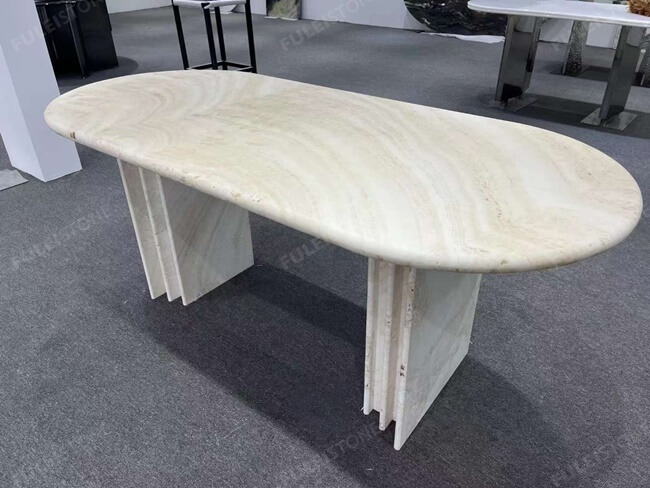
A coordinated stone project brings material selection, cutting details and finished components together. The reference examples show slab layouts, cut-to-size pieces, countertops and decorative stonework. Use them to explain the shapes, edge profiles and visual direction you would like to explore. Each requested item needs its own review of material suitability, dimensions, finish and installation requirements; a photograph alone does not confirm that every option is available for your selected stone.
Share a room schedule or drawing set with the areas, quantities and details you need. Then confirm the scope for samples, vein direction, cutting, inspection and packing before placing an order. Keep approved material references and drawings with the quotation so the finished pieces can be checked against the same requirements. Product-specific availability, technical evidence, commercial terms and delivery arrangements are confirmed separately for each enquiry.
Get Samples & Quotation

HOW WE WORK
A Clear Path from Enquiry to Delivery
From your first enquiry to arrival checks, use these ten stages to agree the details of a stone order. Images below are workflow illustrations, not factory photographs.
- 01
Share Your Brief
Identify the product, application, quantity and destination.

- 02
Review Material Options
Compare representative images and the available finish choices.

- 03
Request a Quotation
Confirm the included scope and any exclusions in writing.

- 04
Approve Samples
Review the color range, surface and visible variation.

- 05
Check Drawings
Confirm dimensions, seams, edge profiles and piece marks.

- 06
Confirm the Order
Agree specifications, responsibilities and commercial terms.

- 07
Review Fabrication
Use the approved drawings and recorded material selection.

- 08
Arrange Inspection
Check dimensions, visible finish and agreed acceptance points.

- 09
Confirm Packing
Match protected pieces and crate labels to the packing list.

- 10
Coordinate Delivery
Confirm shipping documents, unloading and arrival checks.

Get Samples & Quotation
Send your material reference, drawings, dimensions, finish, quantity and destination. These details help define the sample and quotation request.
STOOANCE product enquiries
Project details and material references are welcome.

Unpolished and Unfilled Roman Travertine Tils: Buyer’s Guide
Use this guide to decide whether open-pore, saw-cut travertine suits your project, compare finish and specification choices, assess supplier controls, and avoid costly mistakes in sample approval, fabrication, inspection, and shipping.
What Are Unpolished and Unfilled Roman Travertine Tils?
Travertine is a calcium carbonate stone formed by mineral deposits from water; voids left during formation give it natural pores. Unpolished and Unfilled Roman Travertine Tils are listed as beige travertine, with visible pore structure and natural variation to assess on the actual batch.
Unpolished means the face has not received a polished sheen, while unfilled means its surface pores have not been filled with resin or grout during production. Saw-cut identifies the listed finish: a surface left by cutting rather than subsequently honed or polished.
STOOANCE lists project-customized sizing and thickness options of 18 mm, 20 mm, and 30 mm; confirm the available size and thickness combination for the selected batch. Roman Travertine is a commercial name, not proof of geological origin or a particular quarry.
Where Do Unpolished and Unfilled Roman Travertine Tils Suit?
STOOANCE lists these saw-cut, unfilled beige travertine tiles for floors, indoor and outdoor areas, and wall cladding. Suitability depends on exposure, cleaning demands, and the installation design.
| Application | Main Review | Cleaning Concern |
|---|---|---|
| Indoor floor | Traffic and slip resistance | Dirt in open pores |
| Outdoor floor | Drainage and freeze-thaw | Weathering and deposits |
| Wall cladding | Fixings and structural loading | Accessible cleaning method |
Floor Traffic and Cleaning
Open pores can trap dirt in busy floors and complicate cleaning. Review expected traffic, cleaning methods, and project-specific slip resistance before specifying the saw-cut surface.
Moisture and Outdoor Exposure
Unfilled travertine needs a maintenance plan where water, spills, or weather reach the surface. For outdoor work, assess drainage, freeze-thaw exposure, and applicable local standards.
Wall Cladding Design
Wall cladding shifts attention to substrate, fixing method, and structural loading. Confirm tile thickness, anchorage design, and local requirements with the project engineer and installer.
Select the Right Cut, Pattern, and Tile Format
Cut direction changes how Roman travertine reads across a surface: vein cutting emphasizes linear bands, while cross cutting shows a more clouded pattern. The selected batch determines the pattern actually available.
Set the Cut and Layout Direction
Vein-cut tiles can form continuous lines when laid in one direction. Rotate a sample layout before approval to see how the bands behave across joints.
Actual slabs may vary in color, pores, and band spacing. Base the final layout on the selected batch.
Choose Tile or Cut-to-Size
Standard tile modules simplify repeated layouts; cut-to-size pieces suit drawings with specific panel widths or transitions. Confirm feasible dimensions and the listed 18, 20, or 30 mm thickness against slab yield and handling.
Large pieces also need review against the intended installation method.
Detail Joints, Edges, and Waste
Joint width and edge profile affect alignment and the visibility of natural pores. Show both on the drawings before fabrication.
Cutting waste rises with strict vein matching, oversized pieces, and irregular boundaries. Include a project-specific waste allowance when calculating quantities.
Compare Unpolished and Unfilled Roman Travertine Tils Finishes
STOOANCE lists these beige travertine tiles as saw-cut and unfilled. Compare other treatments against the actual batch before specifying them; their availability must be confirmed.
| Treatment | Appearance | Cleaning |
|---|---|---|
| Saw-cut, unfilled | Visible pores; raw texture | Cavities need attention |
| Filled, honed | Reduced pore visibility; matte | Easier routine wiping |
| Filled, polished | Reduced pore visibility; reflective | Wipes readily; shows wear |
Pore Visibility
Saw-cut, unfilled tiles retain visible cavities and a raw appearance. Request filling if a quieter, more uniform surface is essential.
Cleaning and Maintenance
Open pores can trap dirt and complicate cleaning. Consider a filled treatment for heavily used floors or areas requiring frequent wiping.
Slip Requirements
Saw-cut texture does not establish slip performance. Request application-specific testing for the proposed finish, especially for wet or outdoor floors.
Approve Samples, Batches, and Shop Drawings
STOOANCE can provide representative samples and current batch photos or video for approval. Record the approved material range before releasing shop drawings for fabrication.
Review the Current Batch
A small sample shows texture and finish, but cannot represent every natural variation.
Current batch photos or video should show multiple tiles under consistent lighting, including the full beige color range.
Set the Visual Acceptance Range
Beige tone, open pores, veining, and natural fissures vary across travertine.
An approved range should define which variations are acceptable and identify pieces needing separate review.
Approve Shop Drawings
Shop drawings should confirm dimensions, selected 18, 20, or 30 mm thickness, saw-cut finish, edge profiles, and vein direction.
The final piece schedule should match quantities, labels, and installation sequence before production starts.
Inspect Fabrication Quality Before Shipment
STOOANCE checks the approved travertine batch before cutting, then inspects pieces during fabrication and before packing. Set acceptance criteria for visible variation and fabrication tolerances in the order.
Verify Material and Surface
The approved sample or batch sets the reference for beige color range, open pores, and natural fissures. Inspect production pieces against it before cutting.
Saw-cut faces should have consistent texture across adjoining tiles. Record any treatment or surface condition that differs from the approved specification.
Measure Fabricated Pieces
Shop drawings govern length, width, thickness, edge details, and piece numbering. Check dimensions and flatness during production, then verify quantities and labels before packing.
Agreed tolerances should state how each measurement is taken. Resolve pieces outside those limits before shipment.
Confirm Layout and Evidence
Dry lay helps verify vein direction and alignment where adjoining tiles form a planned pattern. Photos or video can document the layout, surface range, numbering, and final packing.
The order should identify required test documents and their applicable scope. Confirm availability for the actual batch before shipment.
Evaluate a Travertine Supplier
Unfilled travertine exposes natural pores and batch variation. Evaluate suppliers against the actual beige tiles available, their fabrication process, and the records they can provide for your order.
Sourcing and Batch Access
STOOANCE can check current stock, arrange remote video selection, and reserve an approved batch. Ask where the selected material comes from and review actual tile or slab images before committing.
Fabrication and Drawing Review
STOOANCE operates three specialized stone factories and offers cut-to-size fabrication. Submit drawings for review of dimensions, thickness, edges, and finish; confirm achievable tolerances and the production schedule for the selected batch.
Inspection, Packing, and Documents
STOOANCE can provide inspection photos or video, piece numbering, labels, and packing records according to the order. Agree on the inspection and packing plan, then verify the scope and validity of any requested documentation before contracting.
Avoid Common Travertine Buying Mistakes
Roman travertine can vary across one batch, and unfilled pores remain visible in the finished tile. Prevent costly mismatches by approving the material and installation requirements together.
Approve the Batch and Floor Use
One attractive sample cannot define an acceptable color, vein, and pore range. Approve representative tiles from the reserved batch and record the permitted variation.
Unfilled pores may trap dirt or complicate cleaning on busy floors. Confirm the application, maintenance plan, and any filling decision with the specifier.
Specify Finish, Edges, and Joints
Saw cut does not establish slip suitability for every indoor or outdoor area. Check the required slip criterion and test the proposed finish for the destination.
Incomplete drawings invite incorrect cuts. Issue approved dimensions, thickness, edge profiles, joint widths, and layout direction before fabrication.
Close Inspection and Shipping Gaps
Vague inspection criteria leave shade, pores, flatness, and dimensions open to dispute. Agree on acceptance criteria and request inspection photos before packing.
Unlabeled crates slow installation and claims handling. Specify piece and crate labels, then confirm destination-specific import documents with the customs broker before shipment.
Plan the Order, Packing, and Delivery
STOOANCE needs the application brief, drawings, quantity, destination, and target schedule to plan the order. For unfilled travertine, state any pore-treatment requirements before quotation.
Approve the Order
The selected batch and approved sample establish the acceptable visual range. STOOANCE confirms dimensions, thickness, finish, edges, quantities, and quotation before production sign-off.
Approved shop drawings release fabrication. Request inspection photos or video before shipment.
Specify Protective Packing
Fumigated wooden crates or plywood cases can protect tiles in transit. Specify foam, corner protection, piece labels, and packing by room or installation sequence where needed.
Agree on Shipping Responsibilities
EXW puts collection and most logistics with the buyer; FOB includes seller delivery aboard the vessel. CIF adds seller-arranged freight and insurance, while DDP includes destination delivery and import obligations, subject to order review.
Provide the destination, target schedule, site access, and unloading method so STOOANCE can confirm the shipping plan.
Understand Pricing and Total Landed Cost
For Unpolished and Unfilled Roman Travertine Tils, request an itemized quote for the approved batch and project scope. Tile quantities, fabrication requirements, shipping destination, and local charges all change the landed total.
| Cost driver | Quotation detail to request | Buyer check |
|---|---|---|
| Material and batch | Selected batch; usable yield | Match approved sample |
| Tile size and thickness | Custom dimensions; 18, 20, or 30 mm | Check drawings and quantities |
| Fabrication and inspection | Cuts, edges, numbering; inspection records | Define acceptance criteria |
| Packing and freight | Crate specification; freight term and destination | Check damage protection and inclusions |
| Duties and taxes | Import classification; destination charges | Verify with customs broker |
| Local installation | Installer scope; substrate and setting materials | Obtain separate local quote |