
Grooved Limestone Tiles
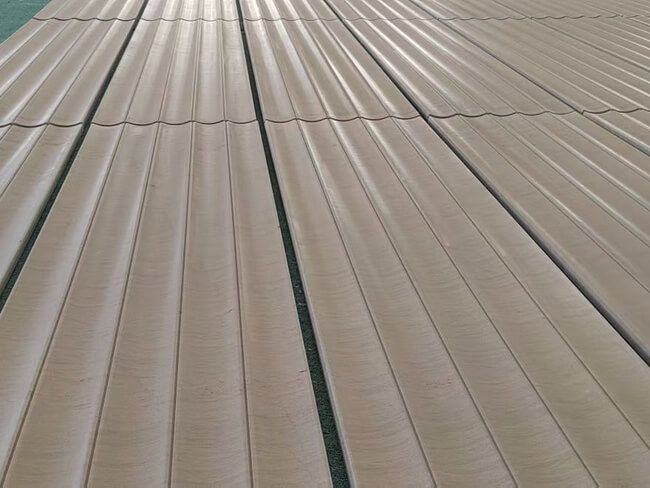
STOOANCE Grooved Limestone Tiles offer a linear texture for beige limestone wall cladding. The listed thickness is 18 mm, with dimensions customized to the project. Groove profile, edge details, and layout should be confirmed from approved drawings.
Natural color, pores, veining, and fissures can vary, so approve the actual material or batch before production. STOOANCE supports remote material selection, drawing-based fabrication, piece numbering, and inspection photos or video according to the order. Share elevations, quantities, destination, and schedule to confirm availability and production details.
- Beige limestone with a grooved finish
- Listed thickness: 18 mm
- Project-customized dimensions for wall cladding
- Batch approval and drawing review before fabrication


Beige Limestone Appearance and Natural Variation
These grooved limestone tiles are specified in beige, a color that can shift in tone across individual pieces and production batches. The appearance of an approved sample helps set the design direction, but a small sample cannot show the full range of a larger order. Review the actual material or selected batch before production when color consistency matters to the project.
Natural limestone may show changes in shade, pattern, pores, and fissures. Their visibility depends on the selected stone and the finished face, so the acceptable visual range should be agreed using representative pieces. If repairs or resin treatment are present, include their appearance in that review rather than relying on a color name alone.
For a wall with adjoining tiles, ask to see several pieces together under lighting similar to the intended space. This makes it easier to judge whether the beige range suits the design and to agree on any pieces that should be set aside before cutting begins. STOOANCE can support remote material selection with photos or video; the final batch remains subject to confirmation.
Request a Quote

Groove Profile, Thickness and Tile Sizes
These beige limestone tiles are listed with a grooved finish and 18 mm thickness for wall cladding. Project-customized tile sizes are available for review. The listed thickness describes the tile; it does not establish how much stone remains beneath a groove.
Before production, approve a physical sample or detailed profile drawing that defines how the grooves should look and repeat across the tiles. The selected limestone, tile size, groove depth and mounting method should then be reviewed together for the intended wall.
- Groove width, depth, spacing and profile shape
- Groove direction and alignment across adjoining tiles
- Whether grooves stop short of tile ends or continue through them
- Finished tile length and width, including any size variations within the layout
- Minimum remaining thickness beneath the grooves, subject to fabrication and installation review
Send the target tile sizes and groove detail with the project drawings. STOOANCE can confirm the feasible profile and final production dimensions against the approved material and application.
Request a Quote

Planning a Grooved Limestone Wall Layout
Grooved limestone tiles are specified here for wall cladding. Before setting out a wall, decide whether the grooves will run vertically or horizontally and how the pattern should continue across adjacent surfaces. An elevation showing the intended direction, joint positions, corners, openings, and changes in wall plane helps the design team assess the overall rhythm before production.
Review the layout at full wall scale, especially around doors, niches, fixtures, and the ends of visible runs. Agree on where the pattern should start and how narrow end pieces or interrupted grooves will be handled. If a continuous appearance matters, identify the key sightlines and transitions for review rather than assuming every wall can use the same setting-out point.
The project architect or qualified local installer should confirm the substrate, fixing method, movement joints, and any site-specific requirements. For wet areas, exterior walls, or other demanding locations, confirm that the selected limestone and proposed wall system are suitable before specifying them. STOOANCE can review the approved application and layout requirements when planning the tile supply; overseas installation is normally completed by local contractors.
Request a Quote
Drawing-Based Cutting and Edge Coordination
For Grooved Limestone Tiles, the cutting schedule should be developed from approved elevation and shop drawings. STOOANCE reviews the proposed tile sizes, joint positions, openings, corners, and exposed edges before fabrication. The drawings should also show where the grooves must align across adjacent pieces and how the pattern ends at each boundary.
- Provide dimensioned elevations with tile positions, openings, and reference lines.
- Mark groove direction and specify the required profile, spacing, and alignment at joints.
- Identify exposed edges, corners, returns, and any required edge treatments.
- Show cutouts and interfaces with doors, fixtures, or other wall materials.
STOOANCE can coordinate cut-to-size pieces and edge details against the approved drawings. The final cutting method and achievable details depend on the selected limestone and confirmed groove design. Share revised drawings before production so affected pieces can be reviewed and the cutting schedule updated.
Request a Quote
Batch Approval, Inspection and Piece Numbering
Before production, approve a sample or the actual beige limestone batch for the intended wall cladding. Review the acceptable colour range, veining, pores and natural fissures on the selected material. A small sample may not represent every tile, so agree on the range the finished order may include.
STOOANCE checks the order against the approved material and drawings, including tile dimensions, the specified 18 mm thickness, groove finish, edge details and quantities. In-process and final inspection also review flatness, finish consistency, visible fissures, any resin treatment and edge quality. The inspection criteria and any required tolerances should be confirmed for the selected batch and application before fabrication.
For a drawing-based wall layout, pieces can be numbered by elevation or installation sequence so the receiving contractor can match them to the approved plan. Inspection photos or video, labels and numbering records are available according to the order. Confirm the numbering plan and record requirements when submitting the drawings; overseas installation is normally carried out by qualified local contractors.
Request a Quote
Packing and Delivery Planning for Grooved Limestone Tiles
Packing should be planned around the approved tile schedule and the way the wall cladding will be received on site. Tell STOOANCE whether crates need to be grouped by room, elevation, or installation sequence, and identify any site limits on crate size, weight, unloading, or storage. This helps the receiving team locate the right material without opening every package.
For these beige, 18 mm grooved limestone tiles, the packing method should account for the finished face, grooved edges, and custom cut sizes. STOOANCE can review protective options such as foam, corner protection, waterproof wrapping, and wooden or plywood cases against the order and shipping route. Final crate construction and quantities should be agreed before dispatch.
Share the destination, preferred Incoterm, delivery address, and required receiving date when requesting a quote. STOOANCE can then confirm the available material, production schedule, packing plan, freight route, and applicable shipping terms. Transit and arrival dates depend on the confirmed order and logistics arrangements; the local contractor should plan unloading, storage, and installation.
Request a QuoteTechnical Specifications
Product Information
- Product
- Grooved Limestone Tiles
- Material / Category
- Limestone
- Color
- Beige
- Size
- Project Customized Size
- Thickness
- 18mm
- Finish
- Groove
- Location
- Wall Cladding
- Material
- Limestone
Order Confirmation
- Selected Material
- Approve the actual material, batch or sample before production
- Custom Fabrication
- Dimensions, thickness, finish, edges and cutouts are confirmed from drawings
- Quality Records
- Inspection photos or video, labels, numbering and packing records are available according to the order
Grooved Limestone Tiles FAQ
Review these common sourcing questions, then send your project requirements for a product-specific quotation.
Request a QuoteCan the groove width, depth and spacing be customized?
Yes, STOOANCE can review custom groove width, depth and spacing for these beige limestone wall tiles. The listed product has a grooved finish and 18 mm thickness; STOOANCE supports drawing-based fabrication, but specific groove dimensions are not confirmed. Feasibility depends on the selected stone, tile size, edge details and intended installation. Send a dimensioned drawing or reference sample with your required groove profile and quantity so STOOANCE can confirm what can be produced before quoting.
What information is needed to confirm custom tile dimensions?
Send STOOANCE dimensioned drawings showing each tile’s length and width, quantities, layout, edge details, cutouts, and the required groove profile, spacing, depth, and direction. The source-listed thickness is 18 mm, but confirm it for your project along with the beige limestone sample or batch and wall-cladding requirements. STOOANCE reviews drawings, material, thickness, and finish before production. The next step is to submit the drawings and reference sample so STOOANCE can confirm fabrication details and tolerances.
Is 18 mm the specified thickness, and how are thickness tolerances agreed?
Yes. The listed thickness for STOOANCE Grooved Limestone Tiles is 18 mm. The allowable thickness tolerance is not specified in the product information, so it must be agreed before production rather than assumed. Provide your drawings, wall-cladding requirements, and any project tolerance standard. STOOANCE can then confirm the selected material, finish, target thickness, and agreed tolerance in the approved order documents, and check thickness during quality control.
Can these tiles be used in wet areas or on exterior walls?
These tiles may be suitable for some wet areas or exterior walls, but that has not been verified for this product. The supplied details confirm beige limestone, 18 mm thickness, a grooved finish, and wall-cladding use; they do not establish water absorption, freeze–thaw performance, or suitability for a specific exposure. Send STOOANCE the location, climate, wall drawings, and local requirements so the selected material and any needed testing can be reviewed. Have a qualified local contractor confirm the fixing and waterproofing design.
How should groove direction and corner transitions be shown on drawings?
Show groove direction with arrows on each wall elevation, and include enlarged plan and elevation details for every inside and outside corner. Mark where grooves align, wrap around, or stop at the corner; identify the starting datum, joint locations, and piece numbers. For STOOANCE’s beige, 18 mm grooved limestone wall tiles, confirm groove spacing and profile, tile dimensions, edge treatment, and corner details on approved shop drawings before fabrication. Review a sample or first piece if the transition is visually critical.
Can STOOANCE arrange remote material selection for Grooved Limestone Tiles?
Yes. STOOANCE supports current-stock checks, remote video selection, batch reservation, and photo or video records. Current availability and the final approved batch must be confirmed before production.
How does STOOANCE control quality before shipment?
STOOANCE checks the approved sample or batch, drawings, dimensions, thickness, finish, edges, colour range, natural fissures, resin treatment, flatness, quantities, numbering, labels, and packing. The inspection plan is matched to the order and application.
Are stone samples free?
Samples are free. The buyer pays the courier charge in advance, and that courier cost can be credited after a formal order is placed.
What information is needed for a quotation?
Send the material or reference image, dimensions, thickness, finish, quantity, edge details, drawings, packing requirements, destination, and schedule. STOOANCE then confirms the suitable supply and fabrication route.
Your One-Stop Stone Supplier
From marble, granite and quartzite slabs to tiles, countertops, vanity tops, stairs and decorative stonework, STOOANCE offers a comprehensive range of stone materials and finished products. Our sourcing and custom fabrication capabilities help you manage wholesale orders and complete stone projects with one team.
Careful material selection, precise cutting and finishing, and quality inspection before packing help deliver consistent workmanship across your order. Whether you need standard products or custom pieces, send us your drawings, reference photos or purchasing list. Tell us the sizes, quantities and destination, and our team will help you choose suitable options and prepare a quotation.
Get Samples & Quotation

HOW WE WORK
Our Stone Supply Process
From material selection and custom fabrication to quality inspection and export packing, STOOANCE coordinates each stage to make your stone purchasing easier.
- 01
Share Your Requirements
Send us your product list, drawings or reference photos, along with sizes, quantities, application and delivery destination.

- 02
Select Your Stone
We help you compare materials, colors, veining and finishes to find suitable stone options for your design and budget.

- 03
Receive Your Quotation
Get a detailed quotation based on your selected materials, fabrication requirements, quantities, packing and agreed shipping scope.

- 04
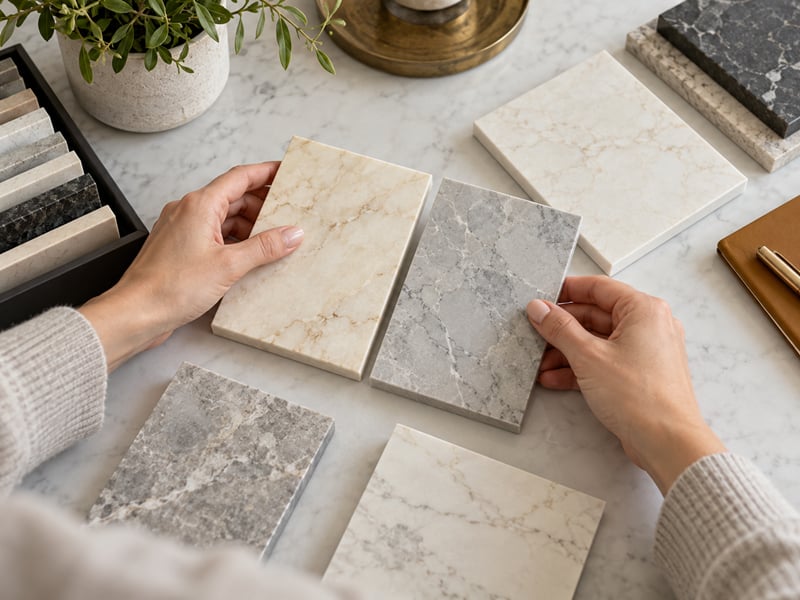
Review Material Samples
Review samples and available slab photos to confirm the color range, surface finish and overall appearance of your selected stone.
- 05
Confirm Fabrication Details
Work with our team to confirm dimensions, edge profiles, cutouts and vein direction before fabrication begins.

- 06
Confirm Your Order
Finalize the specifications, quantities, payment terms and production schedule so your order can move forward with clear requirements.

- 07
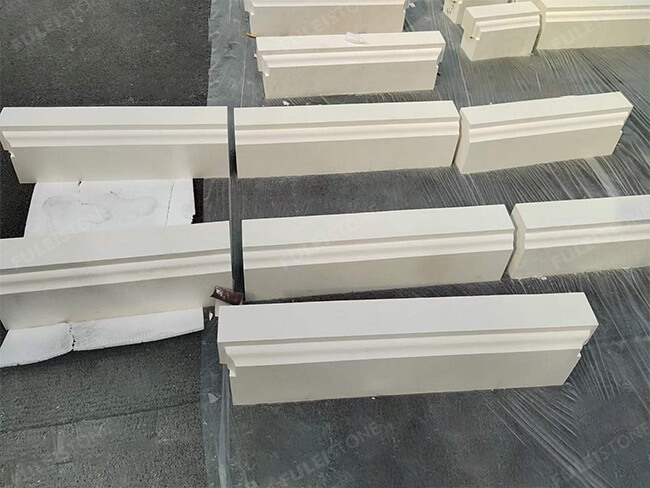
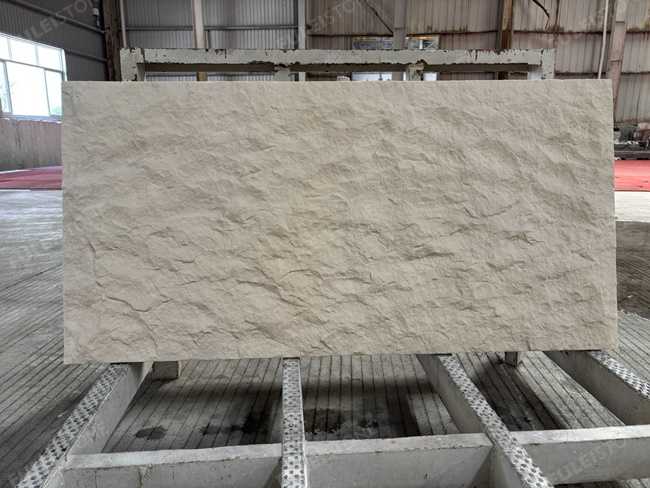
Production & Fabrication
Your stone is cut, shaped and finished according to the confirmed specifications and approved drawings.

- 08
Quality Inspection
We check dimensions, surface finish, edges and overall workmanship against the confirmed order requirements before packing.

- 09
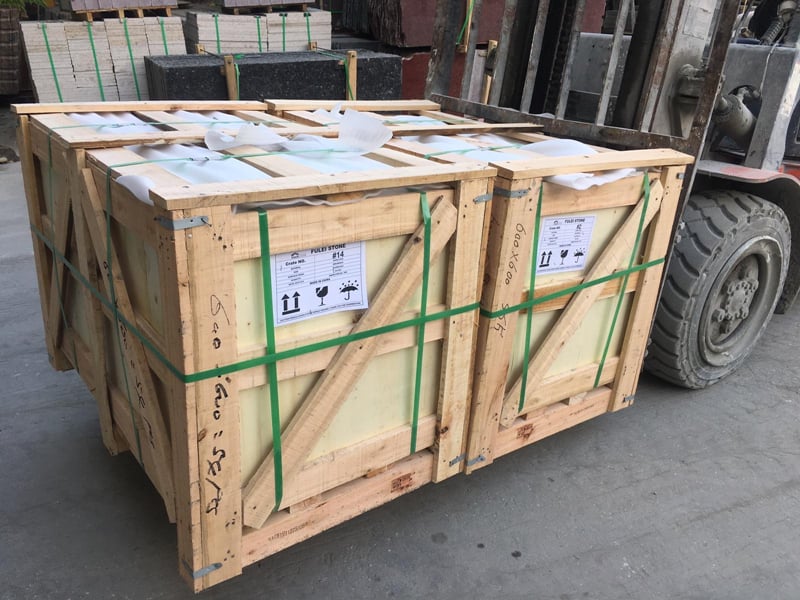
Protective Export Packing
Finished pieces are protected, labeled and packed according to the product type and agreed shipping requirements.
- 10
Shipping & Order Support
We coordinate shipment arrangements and documentation, and stay in touch to support delivery questions and feedback after arrival.

Get Samples & Quotation
Send your material reference, drawings, dimensions, finish, quantity and destination. These details help define the sample and quotation request.
STOOANCE product enquiries
Project details and material references are welcome.

Grooved Limestone Tiles: A Buyer’s Guide to Project Specification and Sourcing
Use this guide to decide whether grooved limestone suits your wall project, specify an approvable finish and fabrication package, assess supplier controls, and avoid costly mistakes in sampling, inspection, packing, and purchasing.
What Are Grooved Limestone Tiles?
Grooved Limestone Tiles are natural limestone pieces with machined channels across the face. The grooves create a repeating relief that adds texture and shadow to wall cladding, with the visible pattern shaped by the specified groove layout.
STOOANCE lists this product as beige limestone with a grooved finish, project-customized size, and 18 mm thickness. These details describe the source-listed product; the fabrication drawings must establish the dimensions and groove arrangement for each wall area.
Natural limestone varies in color, pores, veining, and fissures from piece to piece. Approve the actual material and batch, then confirm the drawings and intended wall application before treating the appearance or specifications as final.
Where Do Grooved Limestone Tiles Work Best?
STOOANCE lists these beige Grooved Limestone Tiles at 18 mm thick for wall cladding. Interior walls are the clearest starting point; final suitability depends on the installation conditions.
Feature Walls and Hospitality Interiors
Grooved limestone gives reception walls, hotel lobbies, and restaurant features a textured focal point. Place it where the surface can be seen without frequent contact.
Vertical grooves draw the eye upward; horizontal grooves emphasize width. Grazing light makes the relief more pronounced, so review a lit sample before fixing the layout.
Residential Interiors
Living-room features, entry walls, and bedroom accents can use the same texture on a smaller scale. Coordinate groove direction with adjacent panels and the room’s main light source.
Limestone can show pores, fissures, and color variation. Approve the actual material range before treating a sample as representative.
Conditions That Need Review
Limestone can stain and is sensitive to acidic cleaners. Agree on cleaning and maintenance expectations for walls exposed to splashes or frequent handling.
Wet areas, exterior walls, and other demanding settings need a project-specific review of the stone, detailing, exposure, and local installation method before specification.
Groove Profiles and Layout Options
Grooved Limestone Tiles use cut channels to create shadow and rhythm on a wall. Profile choice depends on the selected limestone, tile thickness, and fabrication review; assess it under the intended lighting.
| Concept | Visual Effect | Review Point |
|---|---|---|
| Narrow | Fine rhythm | Spacing consistency |
| Wide | Bolder bands | Edge definition |
| Shallow | Subtle shadow | Lighting angle |
| Deeper | Stronger shadow | Remaining thickness |
Profile Choices
Straight channels can be narrow or wide, shallow or deeper.
Deeper cuts need a check of the stone remaining beneath the groove; confirm feasibility against the selected material.
Direction and Joint Alignment
Vertical grooves emphasize height; horizontal grooves emphasize wall length.
A shared layout datum keeps channels aligned across joints. Detail how the pattern turns or terminates at corners.
Drawings and Sample Approval
Repeat patterns need a defined starting point and a rule for cut tiles.
Show groove width, depth, pitch, direction, joint locations, and corner returns on drawings. Approve the profile on a physical sample before production.
Choosing Limestone and Surface Finishes
Limestone density, pores, and fissures influence how cleanly groove edges cut. Review the actual material and a finished sample under the wall’s intended lighting.
| Finish | Appearance | Grooves and Upkeep | Fabrication Check |
|---|---|---|---|
| Honed | Matte, even | Clear lines; clean recesses | Review pore exposure |
| Brushed | Soft texture | Softer lines; more dust retention | Check edge definition |
| Sandblasted | Granular matte | Reduced contrast; textured cleaning | Trial on selected stone |
Inspect the Stone
Dense, sound stone generally holds sharper groove edges; open pores and fissures may interrupt the profile.
Beige color range and batch variation become more visible across repeated panels.
Verify Material Identity
Commercial stone names identify trade products, not verified geological classifications.
Check representative pieces for pores, fissures, repairs, and color range before approving a batch.
Compare Surface Finishes
A finished sample reveals whether treatment softens groove definition or exposes pores.
Narrow grooves and textured faces can retain dust, so confirm the cleaning approach.
Specify Grooved Limestone Tiles from Drawings
The source product lists an 18 mm thickness for Grooved Limestone Tiles. Project dimensions and tolerances still need confirmation against the selected material and approved drawings.
Set Tile Dimensions and Quantities
Elevation drawings should state each tile’s width, height, and quantity by wall or area.
Joint allowances should be shown separately from finished stone dimensions so the cutting schedule reflects the intended layout.
Define Grooves and Edges
Groove details should show profile, width, depth, spacing, and direction, including where patterns meet at corners.
Edge details should identify exposed edges, returns, miters, and any groove termination at joints or openings.
Approve the Fixing Interface
Backing or fixing details should identify the substrate, attachment method, and any required clearance for the local installer.
STOOANCE uses approved elevations and fabrication drawings to confirm dimensions, finish, edges, and piece numbering before cutting.
Approve Samples and the Production Batch
Grooved Limestone Tiles need three approvals before production: the limestone sample, a grooved first piece, and the selected batch. Record the agreed appearance under lighting representative of the installation.
Approve the Material Range
A small beige limestone sample shows texture and tone, but cannot capture every pore, fissure, or color shift across a batch.
The approved range should state which natural features and repairs are acceptable.
Check the First Grooved Piece
An 18mm first piece lets buyers inspect groove spacing, depth, edge quality, and finish against the approved drawing.
View it in agreed lighting; shadows can change how consistent the grooves appear.
Confirm the Production Batch
Representative batch photos or video should show multiple tiles together, including any visible variation or repairs.
STOOANCE can support remote selection and batch reservation when buyers need a consistent range across a larger wall.
Inspect Fabrication, Finish, and Packing
Approved samples and drawings set the acceptance criteria for Grooved Limestone Tiles. Agree on natural color variation and visible repairs before production.
Check First Pieces
Before production, verify dimensions, specified 18 mm thickness, groove spacing and depth against drawings. Check flatness, alignment, and edge quality on first pieces.
Release the batch only after the first pieces meet the approved criteria.
Inspect Finish and Layout
During production, compare finish consistency, visible repairs, and beige color range with the approved sample. Inspect grooves under consistent lighting.
Dry lay adjoining tiles where layout continuity matters. Photograph the arrangement before packing.
Verify and Protect Shipments
Before shipment, reconcile piece counts and numbering with drawings and the packing list. Photograph inspected faces, edges, and packed crates.
Pack tiles with protective materials by elevation or installation sequence. Label packages to guide local installers.
Choose a Supplier for Grooved Limestone Tiles
Grooved Limestone Tiles require a supplier who can identify the selected stone batch and reproduce the approved groove pattern. Ask for current availability and a fabrication review before committing to a project schedule.
Trace Material and Confirm Capacity
STOOANCE can coordinate sourcing, remote slab selection, and batch reservation. Confirm the available limestone batch, production capacity, and schedule for the specific order; natural color and pore variation should be assessed on actual material.
Review Drawings and Sample
Groove fabrication should be checked against shop drawings and an approved sample. Confirm tile thickness, groove profile, spacing, edge details, and project tolerances with STOOANCE before production.
Check Inspection and Export Handover
STOOANCE can coordinate inspection photos or video, piece numbering, labels, and export packing. Agree on order-specific documentation and packing records; qualified local contractors normally handle overseas installation.
Avoid Common Purchasing Mistakes
Grooved Limestone Tiles require approvals tied to the actual batch, shop drawings, and packing plan. Small omissions can become visible across a finished wall.
Approve the Actual Stone
A single image cannot establish the acceptable beige range, pores, or fissures. Approve a physical sample and representative batch photos or video before production.
Limestone can react to acidic cleaners and site exposure. Record the intended location and maintenance requirements in the material approval.
Resolve Geometry on Drawings
Groove width, depth, spacing, and direction need an approved profile drawing and elevation layout. Mark where the pattern starts and how it turns corners.
Nominal tile dimensions do not establish installed coverage. Confirm joint width, edge cuts, and finished dimensions on shop drawings.
Define Acceptance and Packing
Written acceptance criteria should cover shade range, groove consistency, dimensions, finish, edges, and permitted natural features. Approve the inspection checklist before fabrication.
Unnumbered pieces, vague crate labels, and exposed corners complicate installation. Require a piece schedule, crate list, and corner-protection specification in the packing approval.
Pricing and Ordering Grooved Limestone Tiles
STOOANCE quotes Grooved Limestone Tiles against the selected limestone batch and fabrication brief. The listed 18 mm thickness is a product reference; confirm the required thickness from drawings.
Project-specific quotations need drawings, quantities, groove details, finish, destination, and schedule. Include inspection and packing requirements so the quoted scope is clear.
| Cost driver | What changes the quote | Buyer must confirm |
|---|---|---|
| Material selection | Batch availability and visual range | Approved sample or batch |
| Tile size and thickness | Cutting yield and handling | Dimensions and thickness |
| Groove complexity | Profile and machining effort | Profile drawing and direction |
| Finish | Surface processing | Approved finish sample |
| Order scope | Quantity and fabrication mix | Piece schedule |
| Inspection | Dry lay and record requirements | Acceptance criteria |
| Packing | Protection and labeling | Packing sequence |
| Shipping terms | Route and delivery scope | Destination and Incoterm |