
Limra Limestone Curved Tiles
Limra Limestone Curved Tiles are listed as white, polished stone for indoor wall cladding, with an 18 mm thickness and project-customized sizing. Confirm the curve, dimensions, edges and finish against approved drawings and the selected batch before production. The product record classifies the stone as limestone but also labels its material as marble, so its commercial and geological identification needs confirmation. Natural colour, veining, pores and fissures should be reviewed on the actual material.
- Project-customized dimensions and curved profiles are confirmed from drawings.
- STOOANCE supports remote material selection and batch approval.
- Inspection photos or video, piece labels and packing records can be arranged for the order.
- Current material availability and final specifications are confirmed before quotation.
Limra Stone Appearance and Natural Variation
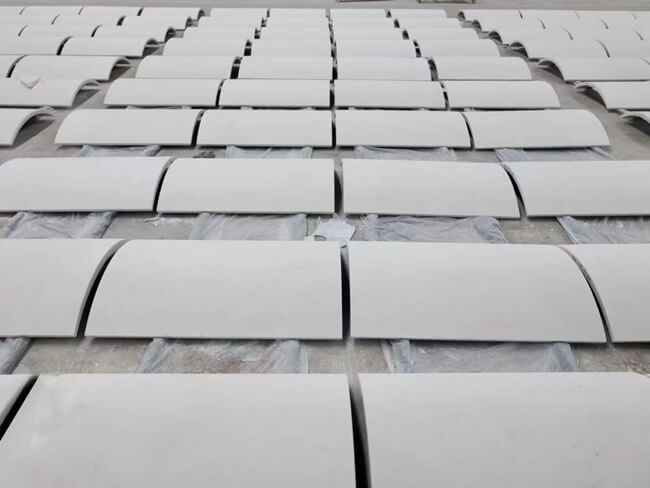
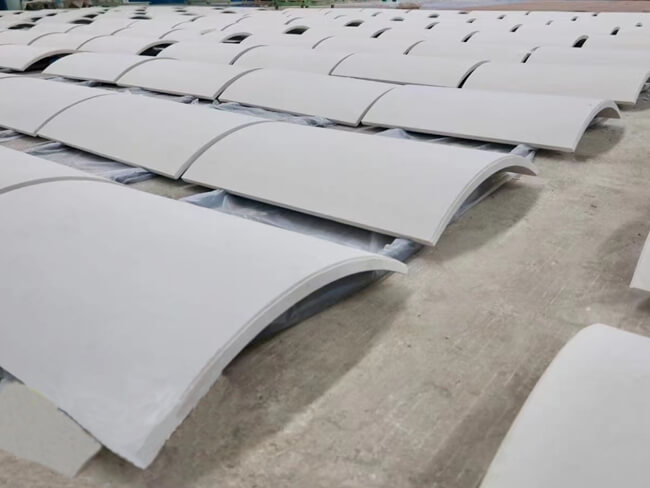
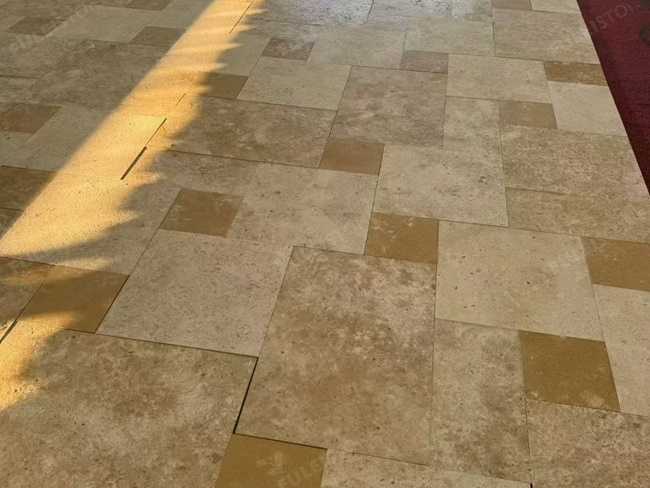
Limra Limestone Curved Tiles are listed in white. For a wall design, that makes the stone’s actual shade and surface character central to the selection. A product image can show the general appearance, but it cannot establish the colour range of the pieces supplied for a particular order.
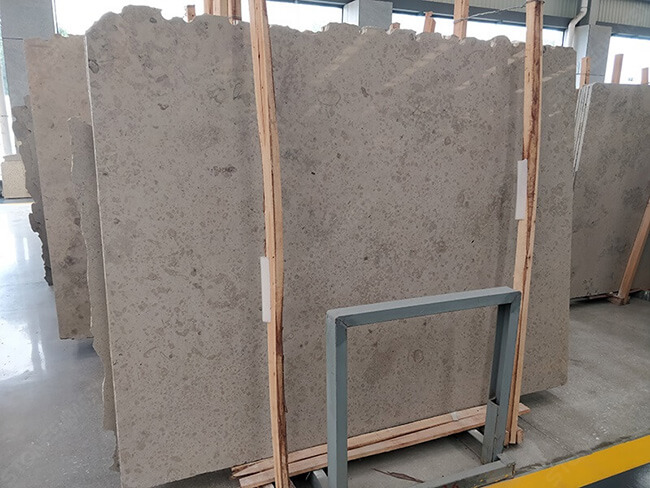
As natural stone, Limra may show differences in tone, markings, pores and fissures from piece to piece. These features should be reviewed on the proposed material, especially where adjacent curved tiles need to read as one continuous surface. The appearance of any resin-treated areas should also be included in that review if treatment is present.
The source listing calls the product limestone but separately labels its material as marble. STOOANCE should confirm the correct commercial description and, if the project requires it, the geological classification before approval. Buyers can use an actual sample or selected batch to agree on an acceptable visual range; a small sample alone may not represent every tile in a larger order.
Request a Quote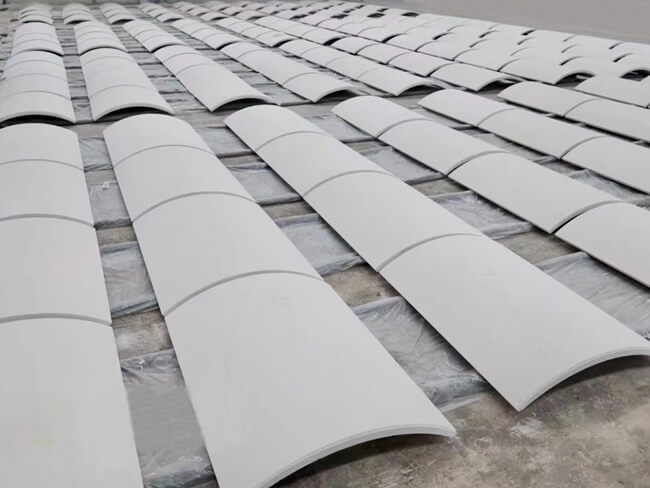
Listed Specifications and Indoor Wall Applications
Limra Limestone Curved Tiles are listed for interior wall cladding. They may be considered for curved feature walls, column surrounds, and other indoor surfaces where the design calls for shaped stone pieces. Suitability for a particular location, including areas exposed to moisture, should be reviewed against the selected material and the project's installation requirements.
Source-listed product details. Attribute: Product family; Listed detail: Limestone. Attribute: Color; Listed detail: White. Attribute: Size; Listed detail: Project customized. Attribute: Thickness; Listed detail: 18 mm. Attribute: Finish; Listed detail: Polished. Attribute: Application; Listed detail: Indoor wall cladding. Attribute: Material field; Listed detail: Marble; classification requires confirmation.
The source labels this product as limestone but also gives “Marble” in its material field. Confirm the stone's commercial description and geological classification before specifying or ordering it. STOOANCE can review the intended wall area and project drawings to establish an appropriate supply and fabrication scope. A qualified local contractor should determine the fixing method and installation details for the site.
Request a Quote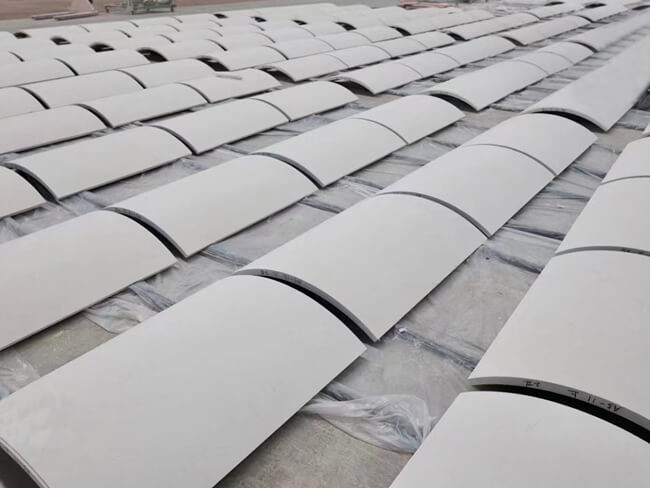
Curved Tile Geometry and Custom Fabrication
For Limra Limestone Curved Tiles, the curve must be defined from the project drawings before fabrication. A reference image alone cannot establish the tile profile or how adjacent pieces meet. STOOANCE can review the design for cut-to-size production and CNC shaping, subject to the approved material and geometry.
Send a dimensioned drawing or model that identifies:
- The finished radius and whether each surface is concave or convex.
- Tile height, arc length, thickness, and any changes in curvature.
- Joint width, edge profiles, and how the curve meets straight sections, corners, or openings.
- Piece quantities, orientation, and the numbering needed to match the elevation drawing.
STOOANCE can use the agreed drawings to plan piece sequencing and a dry lay where appropriate. Confirm the final profiles and fabrication method before production, especially where a tight curve or transition may require a different piece layout. The local installation contractor should verify the site dimensions and substrate against those drawings.
Request a Quote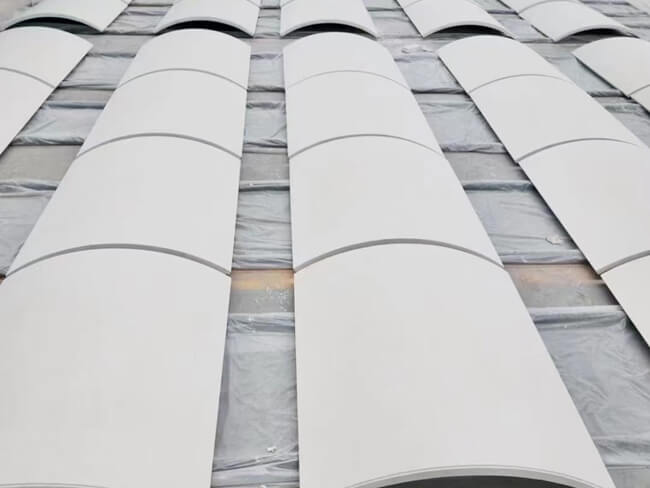
Batch Approval and Pre-Shipment Inspection
Before production, approve a sample or the actual Limra stone batch that will be used for your order. STOOANCE can support remote video selection and batch reservation, subject to current availability. Agree on an acceptable color range and identify any natural fissures, pores or resin treatment that need review. Record the approved material alongside the order requirements so the production team has a clear reference.
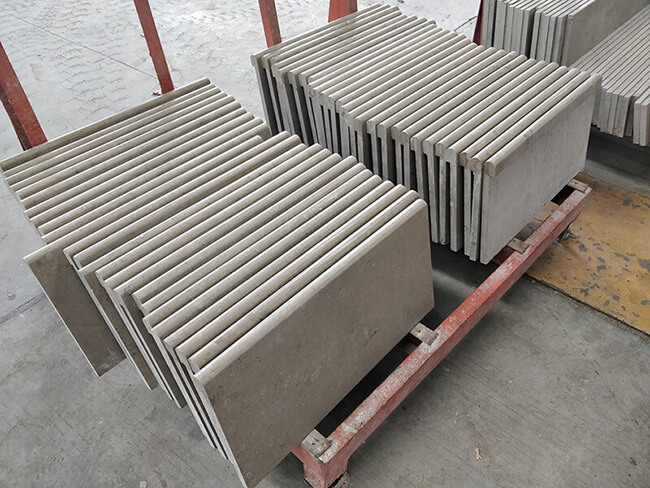
For curved tiles, the inspection plan should follow the approved drawings and installation sequence. Before shipment, STOOANCE checks dimensions, thickness, finish, edge quality, flatness, quantities and piece numbering against the order. A dry lay can be arranged when the layout calls for it, with photographs or video used to review how the pieces relate to one another.
Labels and packing records help the receiving team match pieces to rooms, elevations or drawing references. Share your required inspection points and documentation needs before production; STOOANCE can confirm what records will be supplied for the order. Final acceptance criteria should be agreed against the selected material, drawings and intended indoor wall application.
Request a QuoteTechnical Specifications
Product Information
- Product
- Limra Limestone Curved Tiles
- Material / Category
- Limestone
- Material
- Marble
- Color
- White
- Size
- Project Customized Size
- Thickness
- 18mm
- Finish
- Polished
- Location
- Indoor, Wall Cladding
Order Confirmation
- Selected Material
- Approve the actual material, batch or sample before production
- Custom Fabrication
- Dimensions, thickness, finish, edges and cutouts are confirmed from drawings
- Quality Records
- Inspection photos or video, labels, numbering and packing records are available according to the order
Limra Limestone Curved Tiles FAQ
Review these common sourcing questions, then send your project requirements for a product-specific quotation.
Request a QuoteIs Limra classified as limestone or marble, given the conflicting product attributes?
Limra is listed as limestone in the product name and category, but the same product record labels its material “Marble.” Its geological classification is therefore unconfirmed. Before specifying or ordering it, ask STOOANCE to reconcile those fields and provide material documentation for the selected batch. STOOANCE can arrange sample or batch approval before production; confirm the classification against that approved material and use it consistently in the quotation and drawings.
Are these tiles available only in the listed 18 mm polished specification?
No. The listed specification is 18 mm thick with a polished finish, but the product information also identifies project-customized sizes. Other thicknesses or finishes have not been confirmed for these tiles. STOOANCE can review your drawings and requirements, then check the selected material, batch, fabrication options, and current availability. Send your required dimensions, thickness, finish, quantity, and application so STOOANCE can confirm what is feasible before quoting.
What drawings are needed to define the curve radius, tile dimensions and joints?
Provide STOOANCE with a dimensioned plan and elevation, plus a section showing the curve radius and where it is measured: the finished face, back face, or centerline. Mark each tile’s width and height, the start and end of the curve, joint widths and alignment, and any corners or returns. CAD files or shop drawings can support STOOANCE’s drawing-based fabrication. Before production, confirm the actual material and batch, final dimensions, 18 mm thickness, polished finish, edges, and the local installer’s substrate and fixing details.
How should natural color variation, pores and fissures be reviewed before production?
Review the actual Limra material batch or representative samples before production, and agree on the acceptable range of color, pores, and natural fissures. STOOANCE can support remote video selection and photographic records, then check the approved appearance during fabrication. A small sample may not represent every tile, and any resin treatment should be reviewed with the selected material. Before approving production, confirm the batch, appearance range, finish, and any grouping or piece-numbering requirements against the project drawings.
Are these tiles suitable for floors or exterior walls?
The supplied specifications list Limra Limestone Curved Tiles for indoor wall cladding; they do not establish suitability for floors or exterior walls. The tiles are listed as polished and 18 mm thick, but floor use needs a review of slip resistance and expected traffic. Exterior use needs a review of weather exposure, fixing method, and applicable performance requirements. The product record also calls the material both limestone and marble, so confirm its classification. Send STOOANCE the drawings and intended location for a project-specific assessment.
Can STOOANCE arrange remote material selection for Limra Limestone Curved Tiles?
Yes. STOOANCE supports current-stock checks, remote video selection, batch reservation, and photo or video records. Current availability and the final approved batch must be confirmed before production.
How does STOOANCE control quality before shipment?
STOOANCE checks the approved sample or batch, drawings, dimensions, thickness, finish, edges, colour range, natural fissures, resin treatment, flatness, quantities, numbering, labels, and packing. The inspection plan is matched to the order and application.
Are stone samples free?
Samples are free. The buyer pays the courier charge in advance, and that courier cost can be credited after a formal order is placed.
What information is needed for a quotation?
Send the material or reference image, dimensions, thickness, finish, quantity, edge details, drawings, packing requirements, destination, and schedule. STOOANCE then confirms the suitable supply and fabrication route.
Stone Options for Your Project
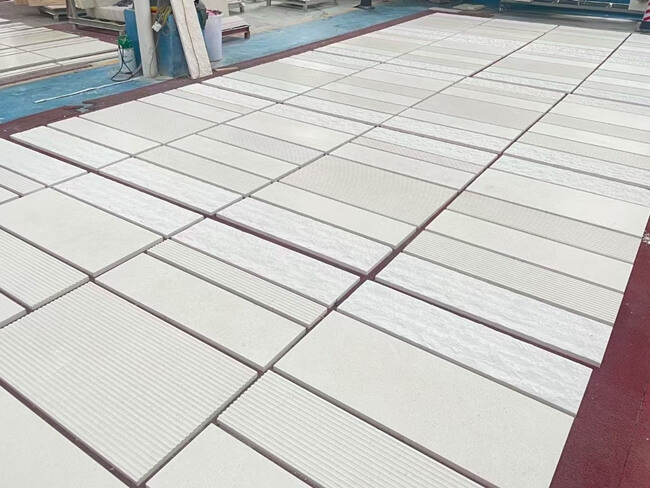
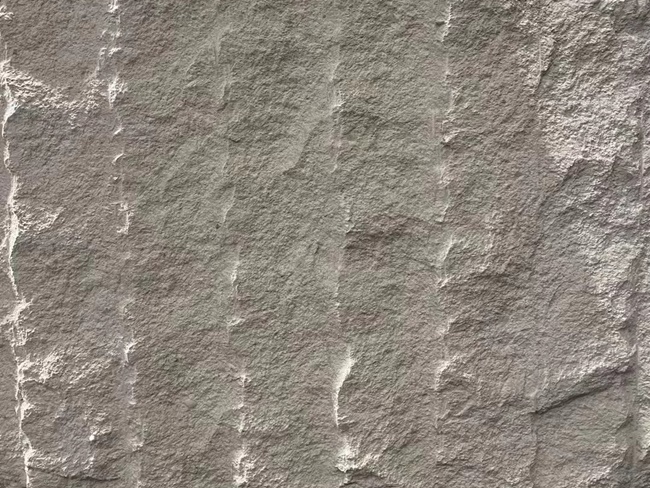
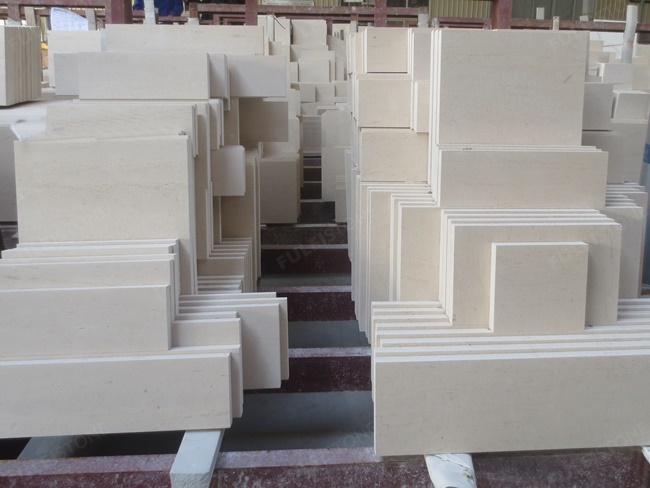
A coordinated stone project brings material selection, cutting details and finished components together. The reference examples show slab layouts, cut-to-size pieces, countertops and decorative stonework. Use them to explain the shapes, edge profiles and visual direction you would like to explore. Each requested item needs its own review of material suitability, dimensions, finish and installation requirements; a photograph alone does not confirm that every option is available for your selected stone.
Share a room schedule or drawing set with the areas, quantities and details you need. Then confirm the scope for samples, vein direction, cutting, inspection and packing before placing an order. Keep approved material references and drawings with the quotation so the finished pieces can be checked against the same requirements. Product-specific availability, technical evidence, commercial terms and delivery arrangements are confirmed separately for each enquiry.
Get Samples & Quotation

HOW WE WORK
A Clear Path from Enquiry to Delivery
From your first enquiry to arrival checks, use these ten stages to agree the details of a stone order. Images below are workflow illustrations, not factory photographs.
- 01
Share Your Brief
Identify the product, application, quantity and destination.

- 02
Review Material Options
Compare representative images and the available finish choices.

- 03
Request a Quotation
Confirm the included scope and any exclusions in writing.

- 04
Approve Samples
Review the color range, surface and visible variation.

- 05
Check Drawings
Confirm dimensions, seams, edge profiles and piece marks.

- 06
Confirm the Order
Agree specifications, responsibilities and commercial terms.

- 07
Review Fabrication
Use the approved drawings and recorded material selection.

- 08
Arrange Inspection
Check dimensions, visible finish and agreed acceptance points.

- 09
Confirm Packing
Match protected pieces and crate labels to the packing list.

- 10
Coordinate Delivery
Confirm shipping documents, unloading and arrival checks.

Get Samples & Quotation
Send your material reference, drawings, dimensions, finish, quantity and destination. These details help define the sample and quotation request.
STOOANCE product enquiries
Project details and material references are welcome.

Limra Limestone Curved Tiles: A Project Buyer’s Guide
Use this guide to assess material suitability, curved geometry, finishes, samples, and fabrication drawings; compare supplier controls and quote terms; and avoid approval, inspection, and shipping mistakes before placing a project order.
What Are Limra Limestone Curved Tiles?
Limra Limestone Curved Tiles are custom curved stone pieces shaped to follow architectural surfaces. The source listing identifies indoor wall cladding as their application, where the curve must be matched to the project drawings rather than assumed from a standard tile format.
18 mm thickness, white color, polished finish, and project-customized size describe the listed configuration; availability and fabrication details require confirmation for each order. The same listing places the product in the limestone category but labels its material as marble. Resolve that discrepancy through geological verification of the actual stone before specifying it as either limestone or marble.
Where Limra Limestone Curved Tiles Are Suitable
Limra Limestone Curved Tiles are listed for indoor wall cladding. Assess each curved wall, column, or feature surface against its substrate, exposure, cleaning plan, and local project requirements.
Indoor Curved Walls and Columns
Curved substrates need verified geometry, stable backing, and an approved fixing design.
Columns and feature surfaces also need adequate joints and maintenance access.
Exposure and Cleaning
Polished limestone can be sensitive to acidic cleaners and staining; agree on a compatible cleaning regime.
Review the actual stone for pores, fissures, and repairs before placing it in splash or touch zones.
Applications Requiring Further Review
Wet areas require project-specific testing and design review for water exposure and fixing.
Exterior cladding and demanding public areas need separate engineering review under local requirements; indoor suitability does not establish performance there.
Curved Tile Forms and Layout Options
Limra Limestone Curved Tiles can be planned as drawing-based components for rounded walls and columns. Confirm each proposed form against the selected stone and fabrication method.
Segments and Column Wraps
Radius-cut segments can repeat around a constant-radius column or curved wall. Convex and concave pieces need separate geometry, even when their visible widths appear similar.
Arc length determines piece count and joint positions; check both against the full elevation.
Transitions and Visual Continuity
Corner and transition pieces may connect curved runs to flat cladding, subject to fabrication review. Their edges and adjacent pieces determine whether the change reads as continuous.
Stone orientation and joint alignment should be reviewed across neighboring pieces before cutting.
Modular or Individually Numbered
Repeatable radii and consistent arc lengths favor modular pieces with a shared cutting pattern. Changing curves, openings, or joint locations call for individually numbered components.
Piece numbers tied to the drawings help local installers maintain the intended sequence.
Choosing a Finish for Limra Limestone Curved Tiles
Limra Limestone Curved Tiles are source-listed with a polished finish for indoor wall cladding. Confirm any alternative finish against the selected batch and curved geometry.
| Finish | Visual Effect | Practical Consideration | Approval Check |
|---|---|---|---|
| Polished | Reflective | Shows variation | Check curved edges |
| Honed | Low sheen | Review cleaning | Confirm suitability |
| Brushed | Textured | Review cleaning | Confirm edge consistency |
| Other | Varies | Geometry dependent | Approve sample |
Light And Variation
Polished faces reflect more light and can emphasize pores, fissures, and shade changes. Honed or brushed samples may read softer.
Cleaning And Edges
Curved faces and profiled edges need consistent finishing. Compare approved samples under project lighting and review cleaning expectations.
Finish Approval
STOOANCE can review finish suitability against the actual material and drawings. Approve a finished curved sample before production.
Approving Samples and the Actual Stone Batch
A small Limra sample shows surface detail but cannot represent the color and markings across a full production batch. Approve the actual stone before cutting curved tiles.
Review the Material Range
Selected slabs reveal the range of color, veining, pores, and fissures. Record which variations are acceptable and whether visible resin treatment is permitted.
Select and Document the Batch
Batch selection should cover enough slabs to represent the order. STOOANCE can support remote video review; record the selected material and agreed acceptance range.
Approve a Curved First Piece
A representative curved first piece shows how the approved finish and natural markings appear after fabrication. Check it against the sample and batch records, then provide written sign-off before production.
Drawings, Dimensions, and Fabrication Details
Approved shop drawings control how curved pieces meet on site. For Limra Limestone Curved Tiles, tie dimensions to a clear measurement reference.
Geometry and Thickness
Show finished radius, arc length, height, joint width, and edge profile for each piece.
Verify the listed 18 mm thickness against the approved design and fixing method.
Measurement References and Interfaces
Identify whether radius is measured at the finished face, back, or centerline. Set datum points and dimensional tolerances.
Detail backing or fixing interfaces and required clearances.
Templates and First Piece
Mark orientation, piece IDs, and installation sequence on each drawing.
Agree site templates with the fabricator; measure and approve a first piece before batch cutting.
Quality Checks for Limra Limestone Curved Tiles
Limra Limestone Curved Tiles require inspection against the approved batch and shop drawings at each production stage. Agree measurable acceptance criteria for the actual stone, curvature, finish, and repairs before cutting.
Before Cutting
The approved batch establishes the acceptable white color range, natural pores, fissures, and any resin treatment. Check the first piece against the drawing for radius, dimensions, thickness, and edge profile.
During Fabrication
Curved pieces need repeated radius and joint checks as cutting proceeds. Inspect thickness, edge quality, finish continuity, and flatness where the geometry permits a meaningful measurement.
Final Layout and Records
A dry lay reveals color jumps, uneven joints, and misplaced pieces across complex layouts. Confirm quantities and piece numbers, then retain labeled photos or video and packing records for site handover.
How to Evaluate a Stone Fabrication Supplier
Limra Limestone Curved Tiles require supplier checks beyond a standard flat-tile order. Ask for evidence tied to the selected batch, approved geometry, and site handover.
Trace the Material
Ask for the stone’s commercial identity, source records, and current batch availability.
STOOANCE supports stock checks, remote video selection, and batch reservation; approve the actual sample before cutting.
Verify Curved Fabrication
Ask which cutting, CNC, or profiling method will produce the specified radius.
STOOANCE offers drawing-based fabrication and dry lay; confirm shop-drawing review, first-piece approval, capacity, and schedule for this order.
Check Records and Handover
Request dimension, thickness, finish, edge, and color-range inspection records, plus piece numbers matched to elevations.
STOOANCE documents QC, labels, and packing; qualified local contractors normally handle overseas installation unless contracted otherwise.
Common Buying Mistakes and How to Avoid Them
Limra Limestone Curved Tiles depend on batch selection, geometry, and installation sequencing. Buying disputes often begin when these details are missing from written approvals.
Approve the Stone, Not the Catalog Image
Catalog images cannot approve the delivered batch. Request actual-batch samples or video before production.
The listing calls the material both limestone and marble. Resolve that classification against supplier documentation before specifying it.
Document Geometry and Natural Variation
Curved pieces need a defined face radius and joint width. Mark both on approved shop drawings.
Natural color, pores, and fissures vary. Agree acceptable ranges against the approved batch or sample.
Match Finish and Labels to the Application
Polished finish is listed for indoor wall cladding. Confirm its suitability for each intended use.
Piece labels must match installation drawings. Cross-reference numbering to drawing positions and dry-lay records.
Packing, Shipping, and Site Handover
Limra Limestone Curved Tiles need packing that preserves each piece’s identity and exposed edges through shipment. Agree on the labeling and protection plan before the crates are closed.
Label and Protect Each Piece
Piece numbers and room or elevation labels should match the approved drawings, especially where curved sections look similar.
Protect polished faces with separators, cushion edges, add moisture protection, and select crates or supports suited to the pieces.
Confirm Freight and Receiving Details
Buyers should approve the packing method, crate list, destination, Incoterm, and site unloading constraints before dispatch.
Name the person who will photograph and record any crate or stone damage at receipt.
Hand Over to the Local Installer
STOOANCE can provide labels, numbering, and packing records aligned with the shipment documents.
Give the local installer those records and the approved drawings so each piece reaches its intended position.
Pricing and Quotation Checklist
18 mm is the listed thickness for these polished indoor wall tiles; alternatives require confirmation against the selected batch and drawings. A reliable quote also depends on curved geometry, fabrication complexity, inspection scope, packing, and delivery terms.
STOOANCE reviews each order against its material, application, and delivery requirements. For comparable quotes, send the approved batch or sample reference; dimensioned plans and elevations showing radii, arcs, joints, and piece numbers; a quantity schedule; thickness, finish, and edge specifications; inspection and packing requirements; destination; and requested Incoterm.
| Cost driver | Buyer input | Supplier confirmation |
|---|---|---|
| Stone and finish | Approved batch, 18 mm thickness, polished finish | Availability and suitability |
| Curved fabrication | Radii, profiles, piece schedule, quantities | Fabrication route and scope |
| Delivery scope | Inspection, packing, destination, Incoterm | Included checks, protection, and shipping basis |